

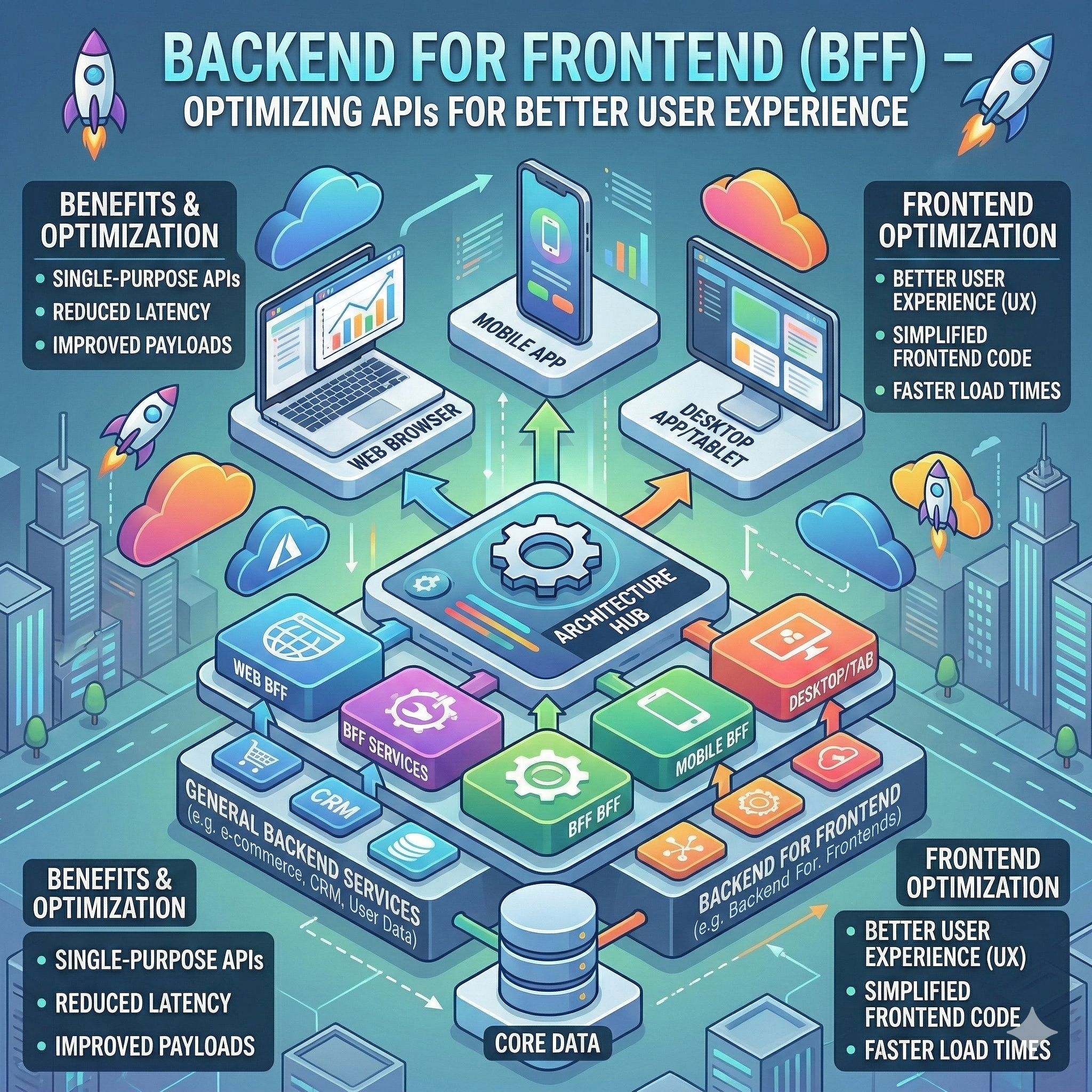
Modern applications often serve multiple platforms such as web browsers, mobile apps, and smart devices. Each platform has different performance needs and data requirements. A single backend service may not efficiently support all of them. This is where the Backend for Frontend (BFF) architecture becomes valuable.
BFF introduces a dedicated backend layer for each frontend application. Instead of relying on one generic API for every platform, each frontend communicates with a backend specifically designed to serve its needs.
🚀 Why BFF Matters in Modern Development
The BFF pattern improves application performance and flexibility by providing:
• Platform-specific APIs optimized for web, mobile, or other devices
• Faster response times through lightweight and targeted data delivery
• Independent development for frontend and backend teams
• Better scalability as each frontend can evolve without affecting others
This approach helps developers build applications that are both efficient and easier to maintain.
⚙️ Optimizing APIs for Different Platforms
Different platforms require different types of data. A mobile app may need quick, lightweight responses, while a web dashboard might require detailed datasets.
With BFF architecture, developers can tailor API responses for each platform, which helps to:
• Reduce unnecessary data transfer
• Simplify frontend logic
• Improve application speed and performance
• Deliver smoother user experiences
🌐 Building Scalable and Flexible Applications
As applications grow, supporting multiple user interfaces becomes more complex. BFF helps solve this by separating backend services based on frontend needs.
This allows teams to:
• Release updates independently
• Maintain cleaner system architecture
• Add new platforms without disrupting existing systems
Smart API design isn’t just about functionality — it’s about delivering the right data, to the right device, at the right time.
