

Modern applications rely heavily on open-source libraries to speed up development and reduce costs. However, using third-party components also introduces potential security vulnerabilities and licensing risks. Software Composition Analysis (SCA) helps identify and manage these risks effectively.
By analyzing the components used in an application, SCA ensures that software remains secure, compliant, and up to date.
🔍 What Is Software Composition Analysis?
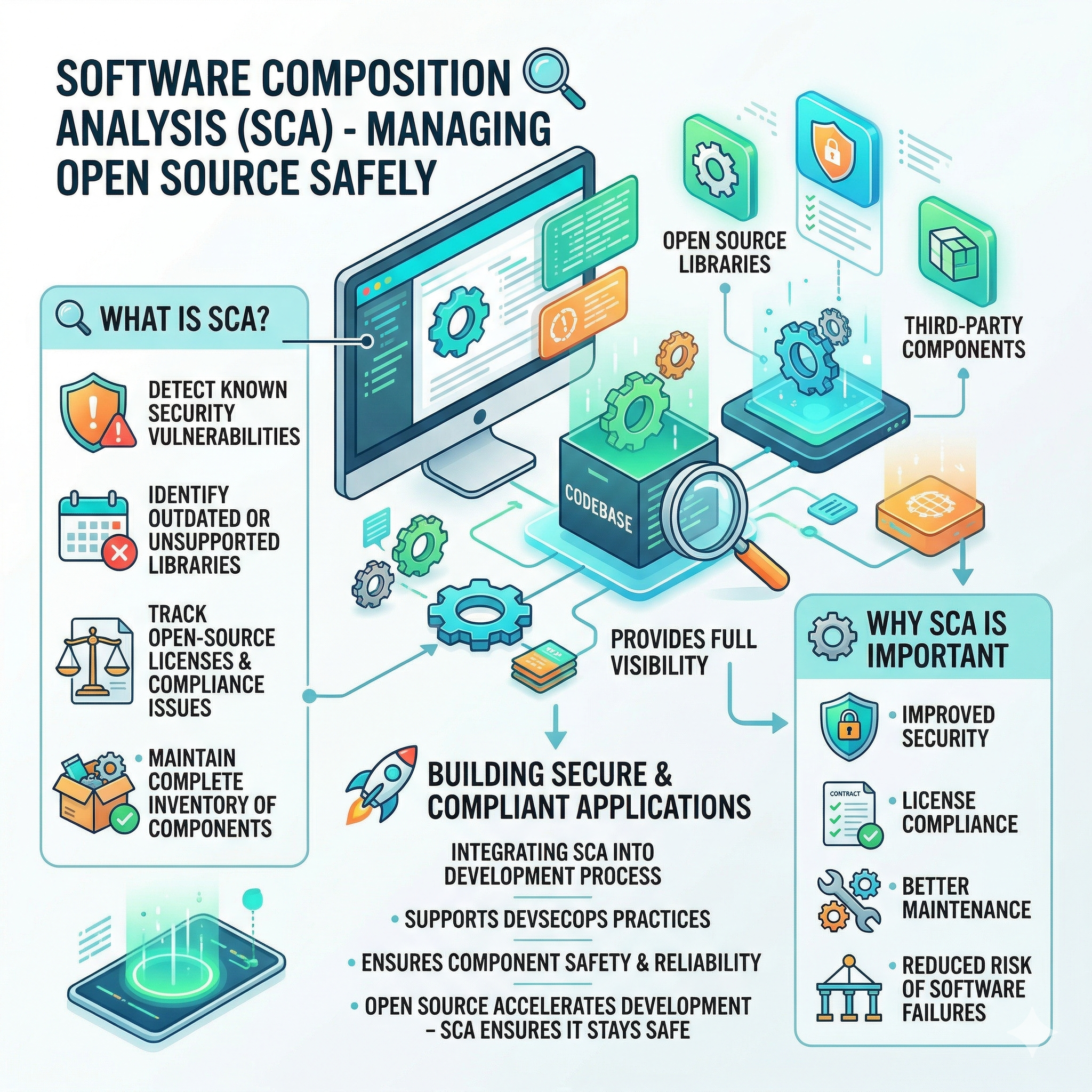
Software Composition Analysis is the process of scanning and analyzing open-source and third-party dependencies within an application.
SCA tools help teams:
• Detect known security vulnerabilities
• Identify outdated or unsupported libraries
• Track open-source licenses and compliance issues
• Maintain a complete inventory of software components
This provides full visibility into the building blocks of an application.
⚙️ Why SCA Is Important
As open-source usage grows, managing dependencies becomes critical for maintaining secure systems.
Key benefits include:
• Improved security by identifying vulnerable components early
• License compliance to avoid legal risks
• Better maintenance through timely updates
• Reduced risk of software failures
SCA helps teams stay proactive instead of reacting to security issues later.
🚀 Building Secure and Compliant Applications
Integrating SCA into the development process ensures that every component used is safe and reliable. It also supports DevSecOps practices by continuously monitoring dependencies throughout the lifecycle.
Open source accelerates development — SCA ensures it stays safe.
