
Every successful application begins with a solid foundation. Software architecture patterns define how different components of a system are structured and how they interact with each other. Choosing the right architecture is crucial for building applications that are scalable, maintainable, and efficient.
A well-designed architecture not only supports current requirements but also allows systems to evolve smoothly as business needs grow.
🏗️ What Are Software Architecture Patterns?
Software architecture patterns are proven design approaches that guide how applications are structured. They help developers organize code, manage complexity, and ensure smooth communication between components.
Common patterns include:
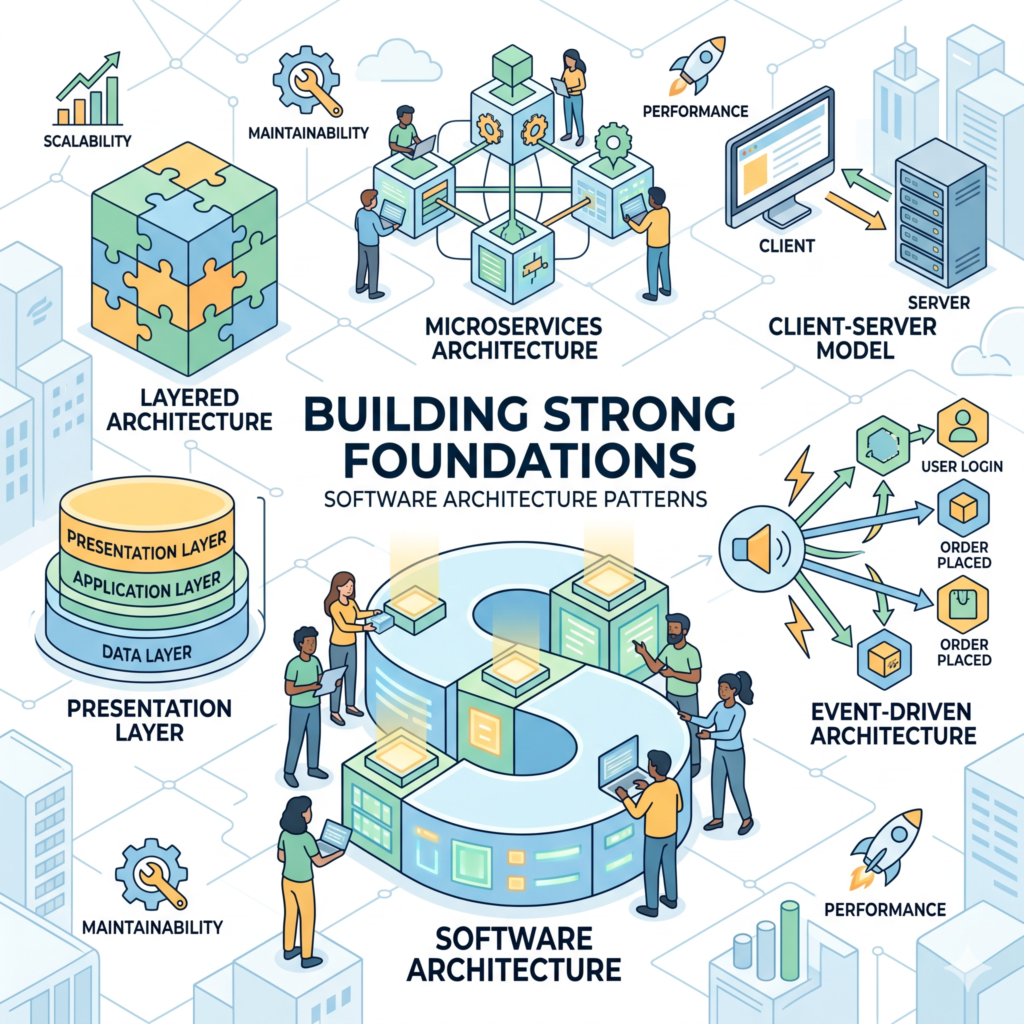
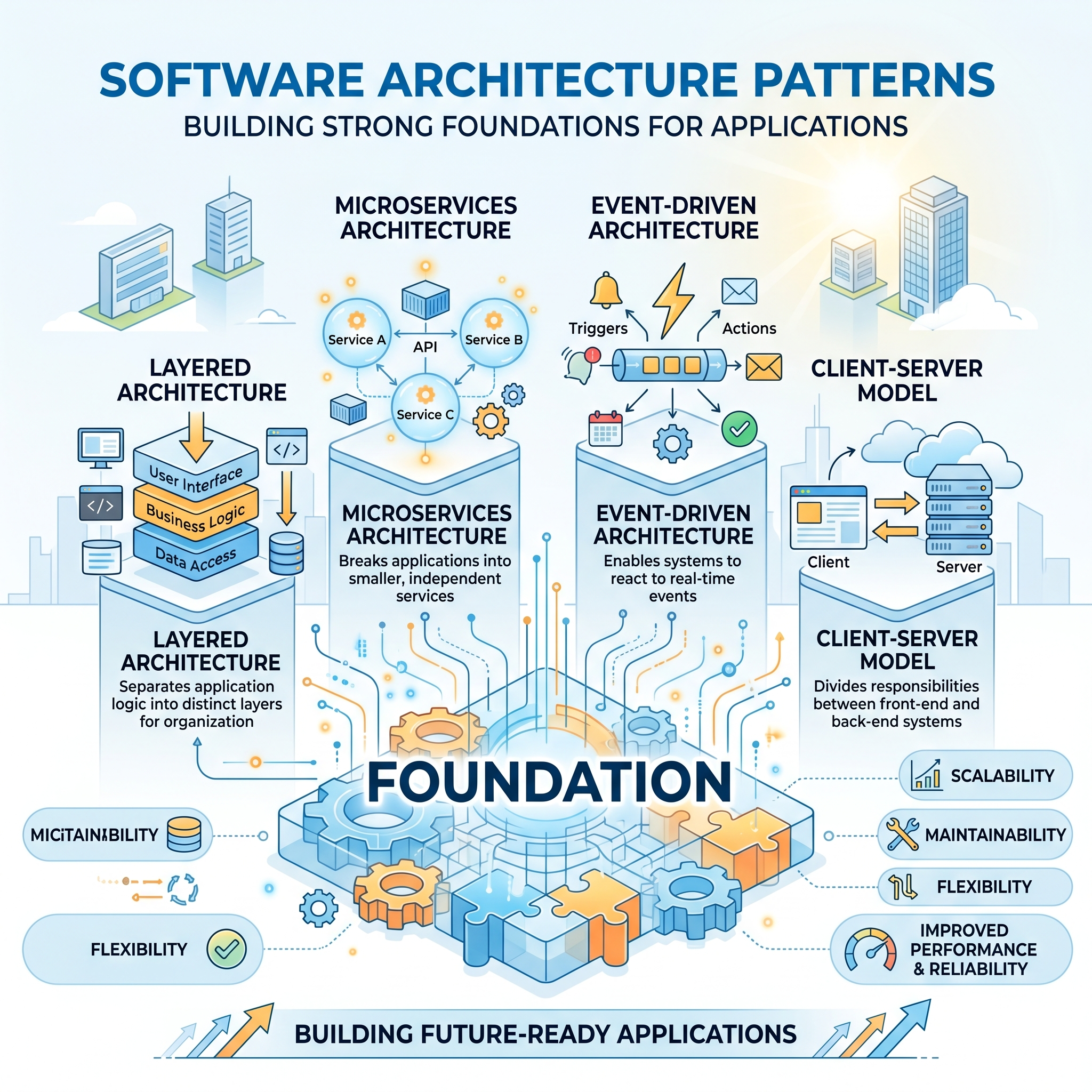
• Layered Architecture – Separates application logic into layers for better organization
• Microservices Architecture – Breaks applications into smaller, independent services
• Event-Driven Architecture – Enables systems to react to real-time events
• Client-Server Model – Divides responsibilities between front-end and back-end systems
Each pattern is suited for different types of applications and business requirements.
⚙️ Why Architecture Matters
Choosing the right architecture has a direct impact on application performance and long-term success.
Key benefits include:
• Scalability to handle growing user demands
• Maintainability for easier updates and improvements
• Flexibility to adapt to changing requirements
• Improved system performance and reliability
A strong architecture reduces technical debt and ensures smoother development over time.
🌐 Building Future-Ready Applications
As applications become more complex, having a clear architectural strategy becomes essential. The right pattern helps teams build systems that are easier to manage, extend, and scale.
Great software isn’t just built with code — it’s built on the right architecture.