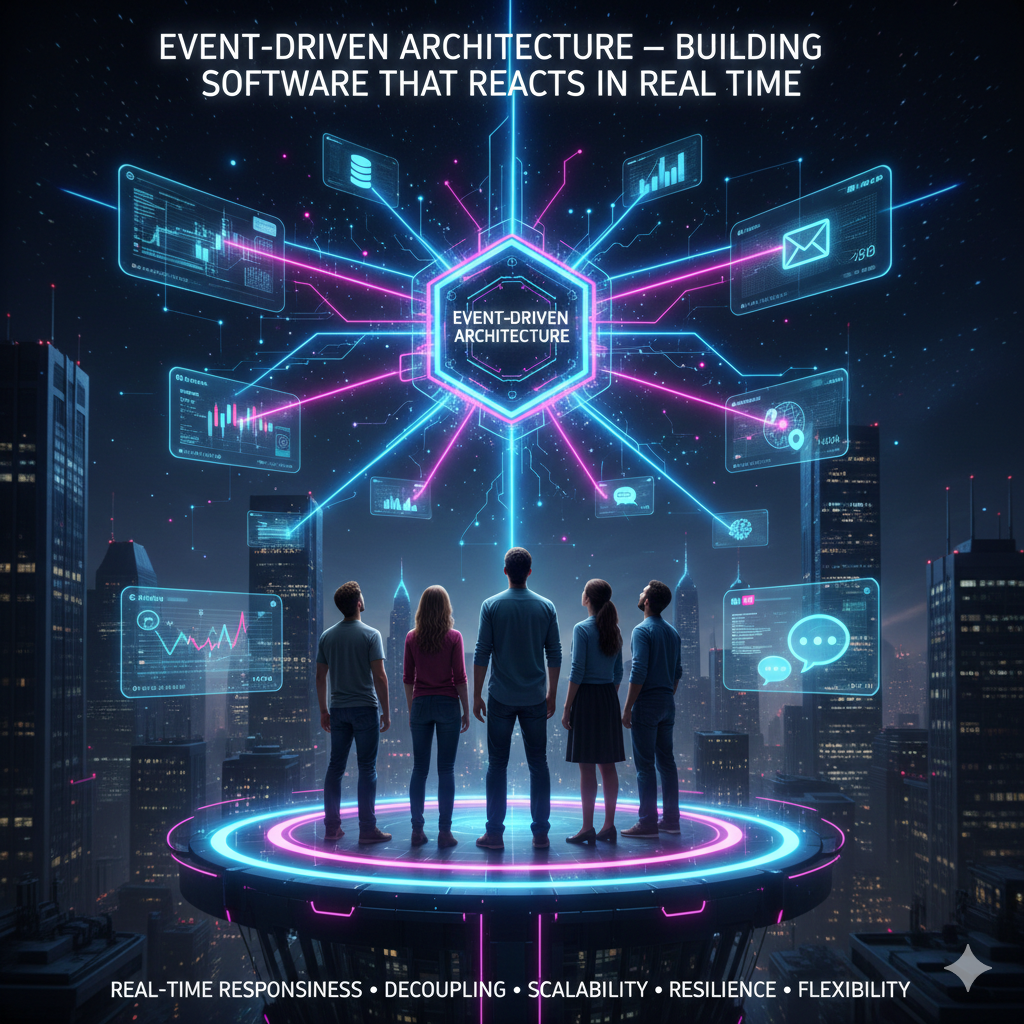

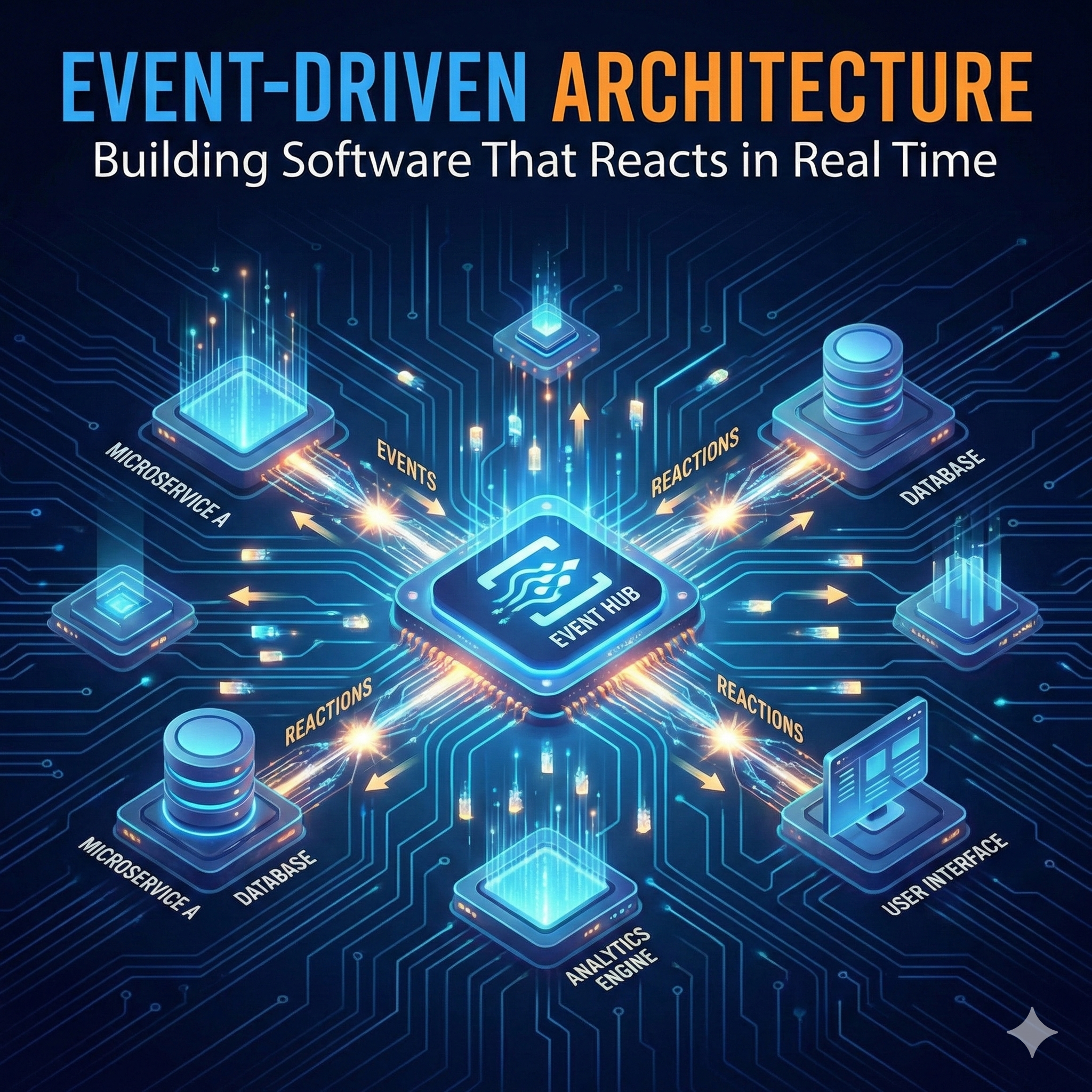
Modern digital applications are no longer designed to wait — they are built to respond instantly. Event-Driven Architecture (EDA) enables software systems to react in real time to user actions, data changes, and system events, making applications faster, smarter, and more scalable.
⚡ What Is Event-Driven Architecture?
In an event-driven system, software components communicate through events instead of direct requests. An event could be:
- A user clicking a button
- A payment being completed
- A database update
- A sensor or system trigger
When an event occurs, it is published to the system, and any service interested in that event reacts accordingly. This removes tight dependencies between services and allows each component to operate independently.
🔗 Why Event-Driven Systems Are More Scalable
EDA improves scalability by allowing services to process events asynchronously. Instead of waiting for responses, systems can:
- Handle high traffic efficiently
- Scale individual services independently
- Continue operating even if one component fails
This makes event-driven architecture ideal for e-commerce platforms, financial systems, IoT applications, real-time analytics, and cloud-native software.
🛠️ Key Benefits of Event-Driven Architecture
- Loose coupling between services
- Faster response times
- Improved system resilience
- Easier feature expansion
- Better support for real-time processing
Popular technologies such as Apache Kafka, RabbitMQ, AWS EventBridge, and Azure Event Grid are widely used to build robust event-driven systems.
🚀 Future-Ready Software Design
As applications grow in complexity and scale, event-driven architecture allows teams to innovate without disrupting existing functionality. New services can subscribe to events without modifying core systems, reducing deployment risks and accelerating development.
In modern software development, reactive systems aren’t optional — they’re essential.