

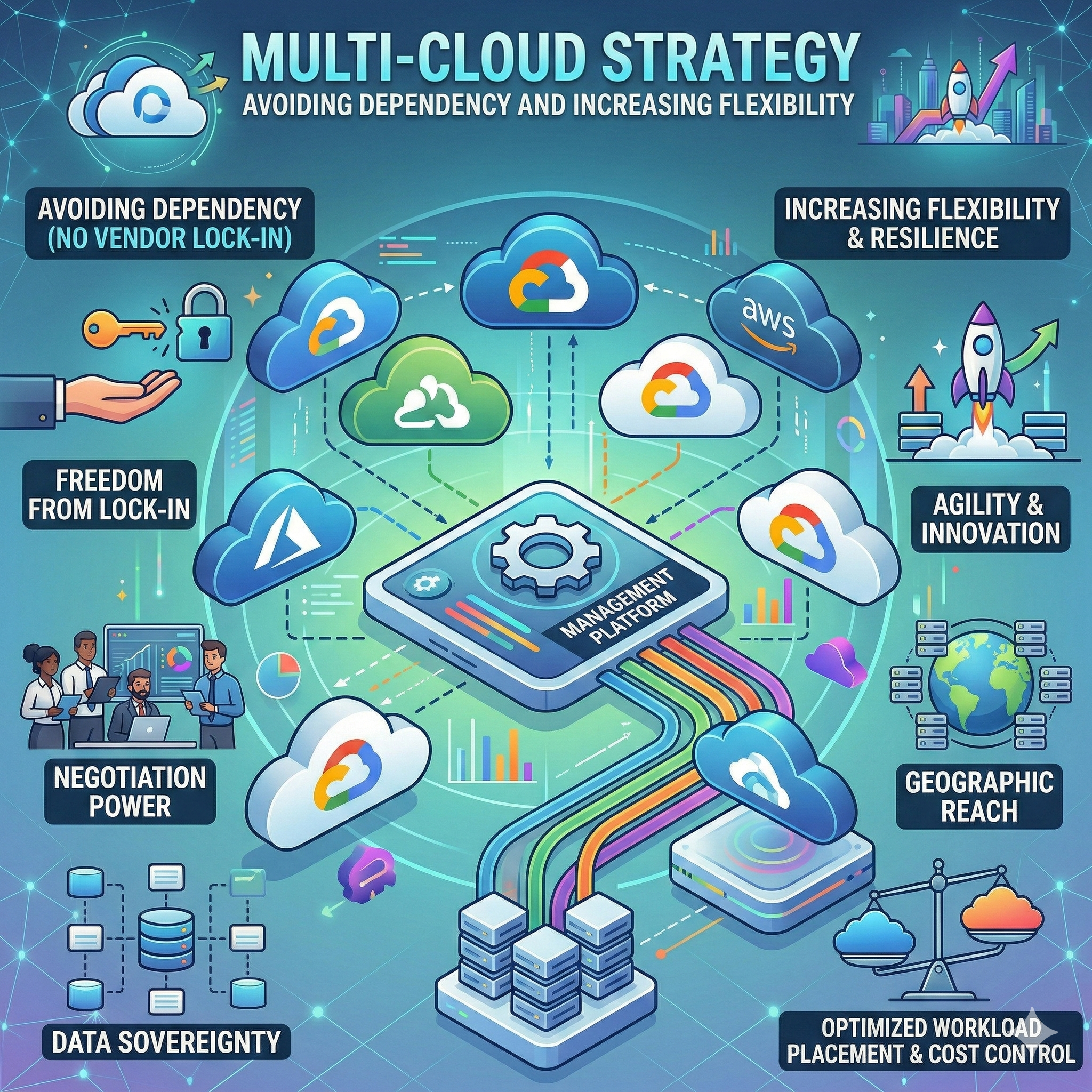
As organizations move more operations to the cloud, relying on a single provider can limit flexibility and increase risk. A Multi-Cloud strategy helps businesses overcome this by using multiple cloud platforms such as AWS, Azure, and Google Cloud to run their applications and services.
By distributing workloads across different providers, companies can improve performance, enhance reliability, and avoid being locked into one ecosystem.
Why Multi-Cloud Matters
Reduced Vendor Lock-In
Businesses maintain greater control by avoiding dependence on a single cloud provider.
Higher Availability and Reliability
If one cloud service experiences downtime, applications can continue running on another platform.
Optimized Performance and Cost
Organizations can choose the best services from each provider based on pricing, speed, or regional availability.
Greater Flexibility
Multi-cloud environments allow teams to adapt quickly to changing business or technical requirements.
Building Resilient Cloud Systems
Multi-cloud architecture supports scalable, high-performance applications that can handle global traffic and growing workloads. It also improves disaster recovery planning and strengthens overall infrastructure resilience.