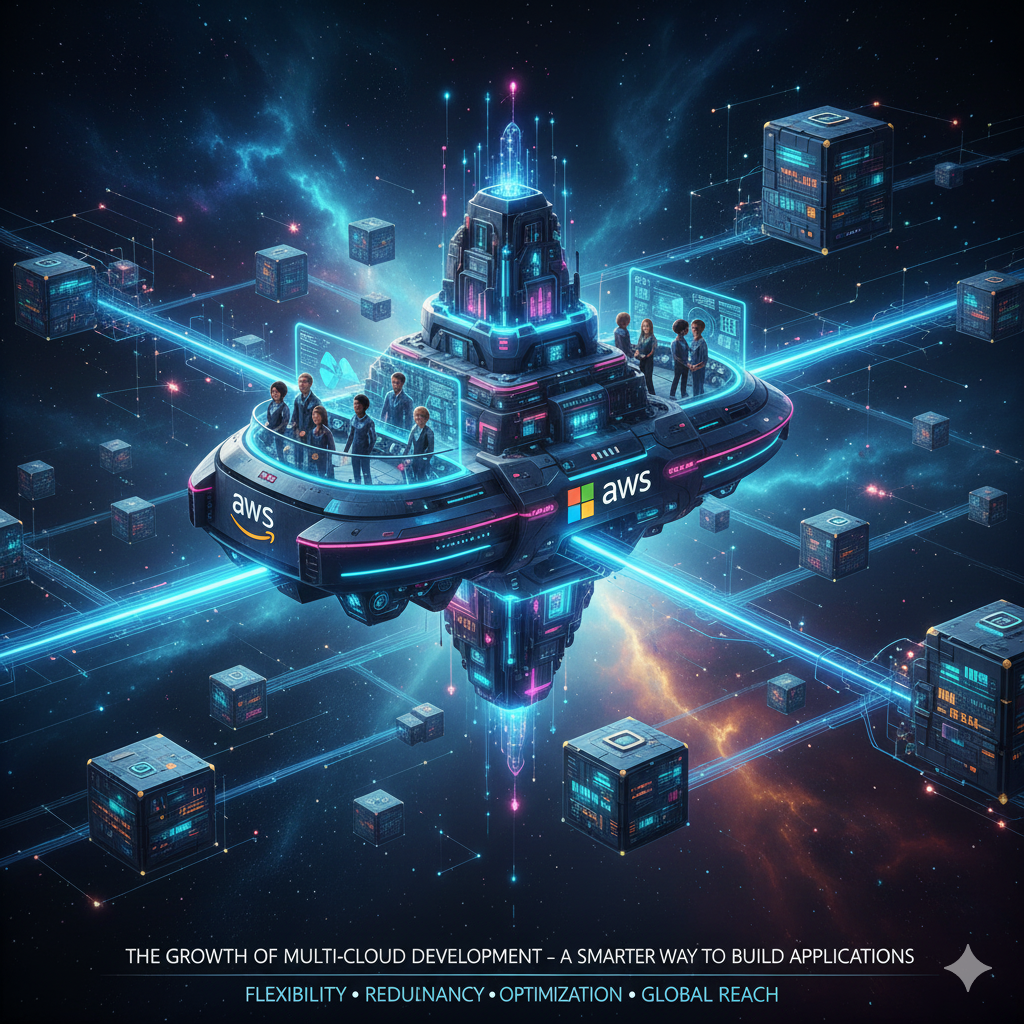

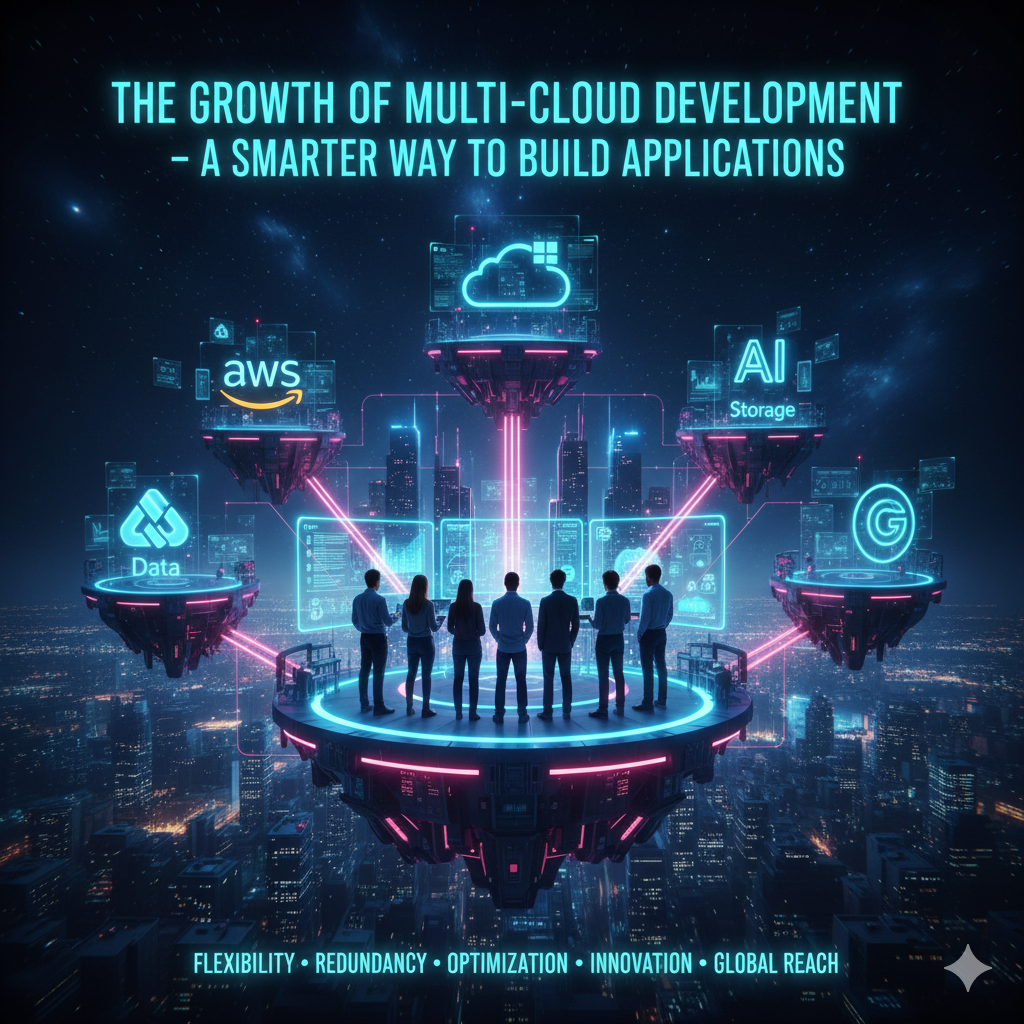
As businesses expand, the complexity of their digital systems grows as well. This is where multi-cloud development becomes essential — using multiple cloud platforms like AWS, Azure, and Google Cloud together to leverage the strengths of each provider.
☁️ Why Multi-Cloud? Flexibility and Control
Instead of depending on a single cloud provider, multi-cloud strategies allow companies to:
- Use the best features from each platform
- Improve performance across different regions
- Optimize costs by choosing efficient services
- Increase reliability with backup options
If one cloud experiences downtime, another can seamlessly take over, ensuring continuous service and a better user experience.
🧩 What It Means for Developers
For developers and IT teams, multi-cloud development opens the door to:
- Building highly scalable applications
- Managing traffic across global users
- Enhancing security through distributed systems
- Designing architectures that adapt to any environment
This approach supports modern applications that must operate efficiently and securely around the world.
🌐 Multi-Cloud in Today’s Digital Ecosystem
As companies adopt cloud-native technologies, multi-cloud architecture is becoming a major advantage. It ensures flexibility, reduces risk, and supports innovation across different platforms.