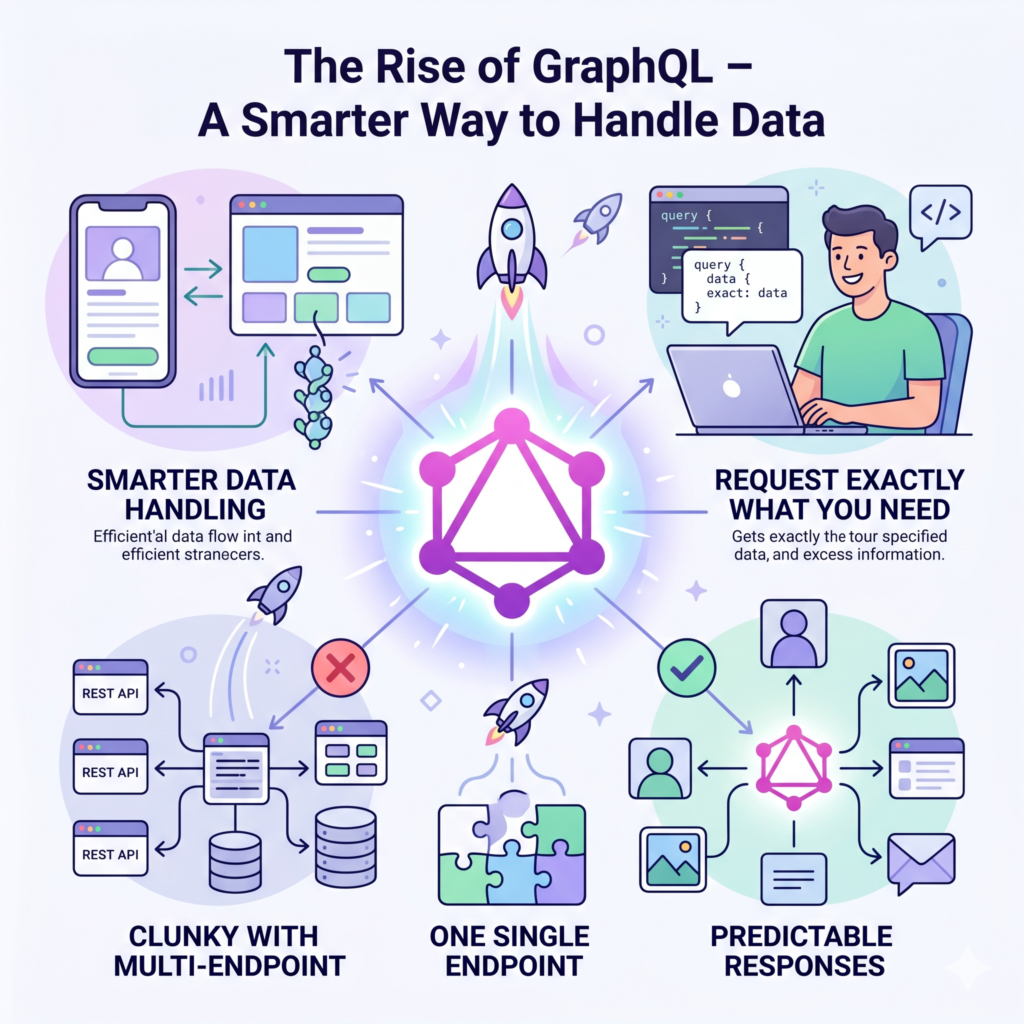

Handling data efficiently is a major challenge in modern applications. As apps grow more complex, sending too much or too little data can affect performance and user experience. GraphQL is transforming how developers interact with APIs by allowing clients to request exactly the data they need — nothing more, nothing less.
This approach makes applications faster, more flexible, and easier to manage.
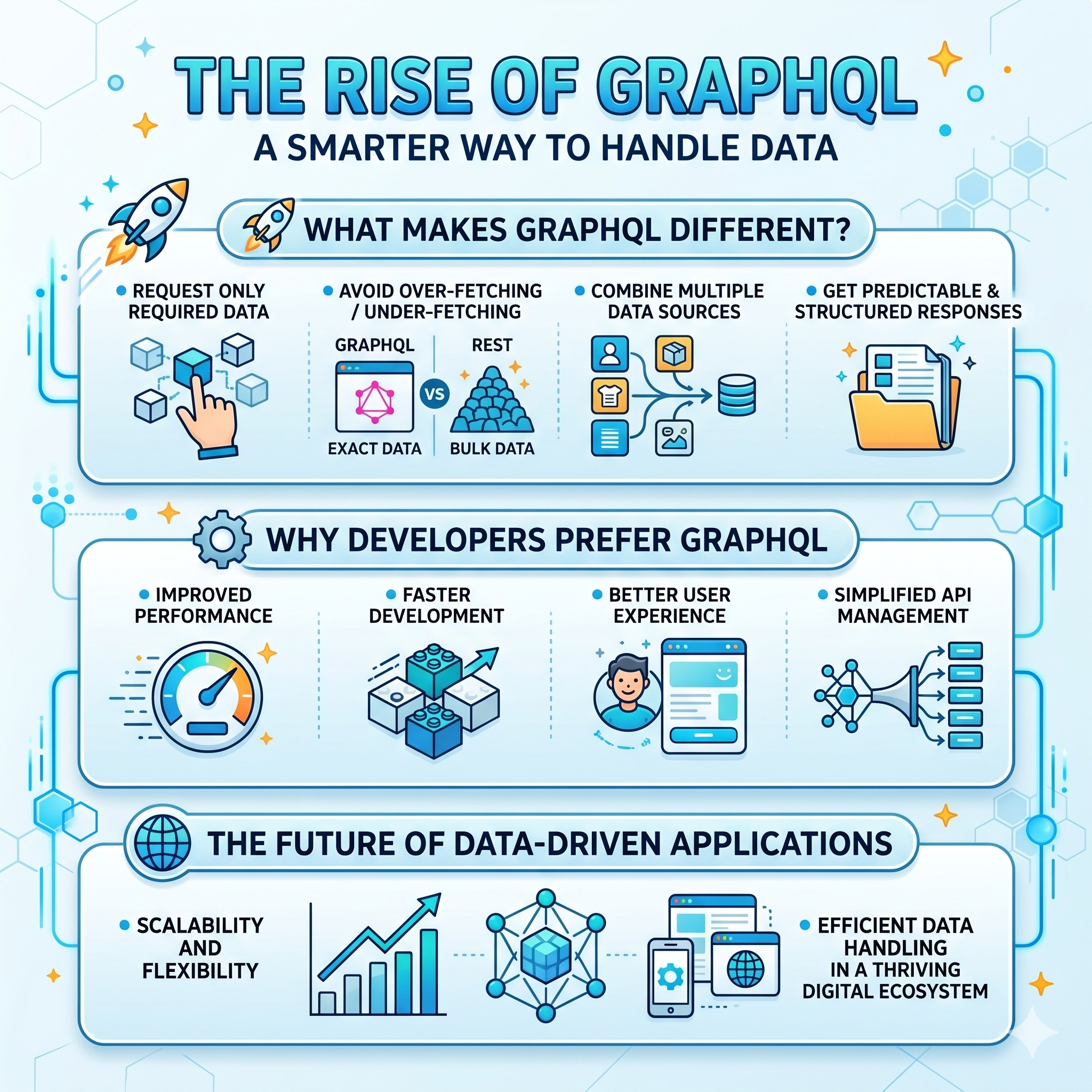
🚀 What Makes GraphQL Different?
Unlike traditional REST APIs, where fixed endpoints return predefined data, GraphQL lets clients define their own queries.
This means developers can:
• Request only the required data in a single query
• Avoid over-fetching or under-fetching data
• Combine multiple data sources into one request
• Get predictable and structured responses
This level of control significantly improves efficiency and performance.
⚙️ Why Developers Prefer GraphQL
GraphQL provides flexibility that modern applications demand, especially for mobile and dynamic web interfaces.
Key benefits include:
• Improved performance with reduced data transfer
• Faster development with flexible data queries
• Better user experience through optimized responses
• Simplified API management with a single endpoint
It allows developers to build responsive and data-driven applications more easily.
🌐 The Future of Data-Driven Applications
As applications become more interactive and data-heavy, efficient data handling becomes critical. GraphQL is quickly becoming a preferred choice for modern development due to its scalability and flexibility.
In a world driven by data, smarter data access makes all the difference.