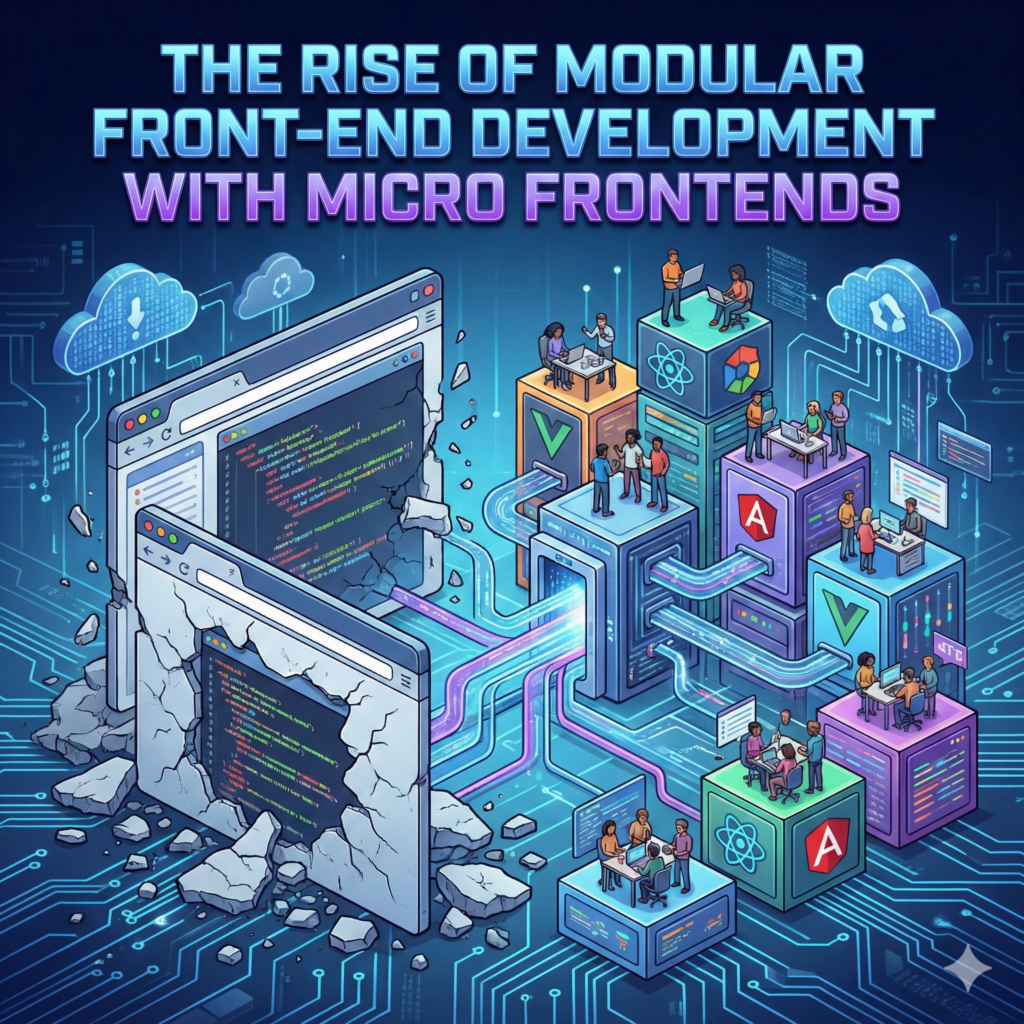


As modern applications grow in size and complexity, managing a single front-end codebase becomes increasingly challenging. Micro frontends address this by breaking a large user interface into smaller, independent modules that can be developed, tested, and deployed separately.
🧩 Why Micro Frontends Matter
Instead of one tightly coupled front-end, micro frontend architecture allows teams to:
- Work in parallel without blocking each other
- Release features faster and more safely
- Maintain and scale codebases with ease
- Reduce the risk of large-scale failures
Each module can use its own framework or technology, offering flexibility while still delivering a seamless user experience.
⚙️ Built for Scale and Flexibility
Micro frontends are especially useful for enterprise platforms, SaaS products, and large web applications where multiple teams contribute to the same product. This modular approach supports faster innovation while keeping systems organized and adaptable.
🌐 Shaping the Future of Front-End Architecture
As businesses demand faster updates and scalable digital experiences, micro frontends are becoming a key architectural choice in modern front-end development.
Micro frontends aren’t just about breaking interfaces apart — they’re about building smarter, more agile user experiences.