

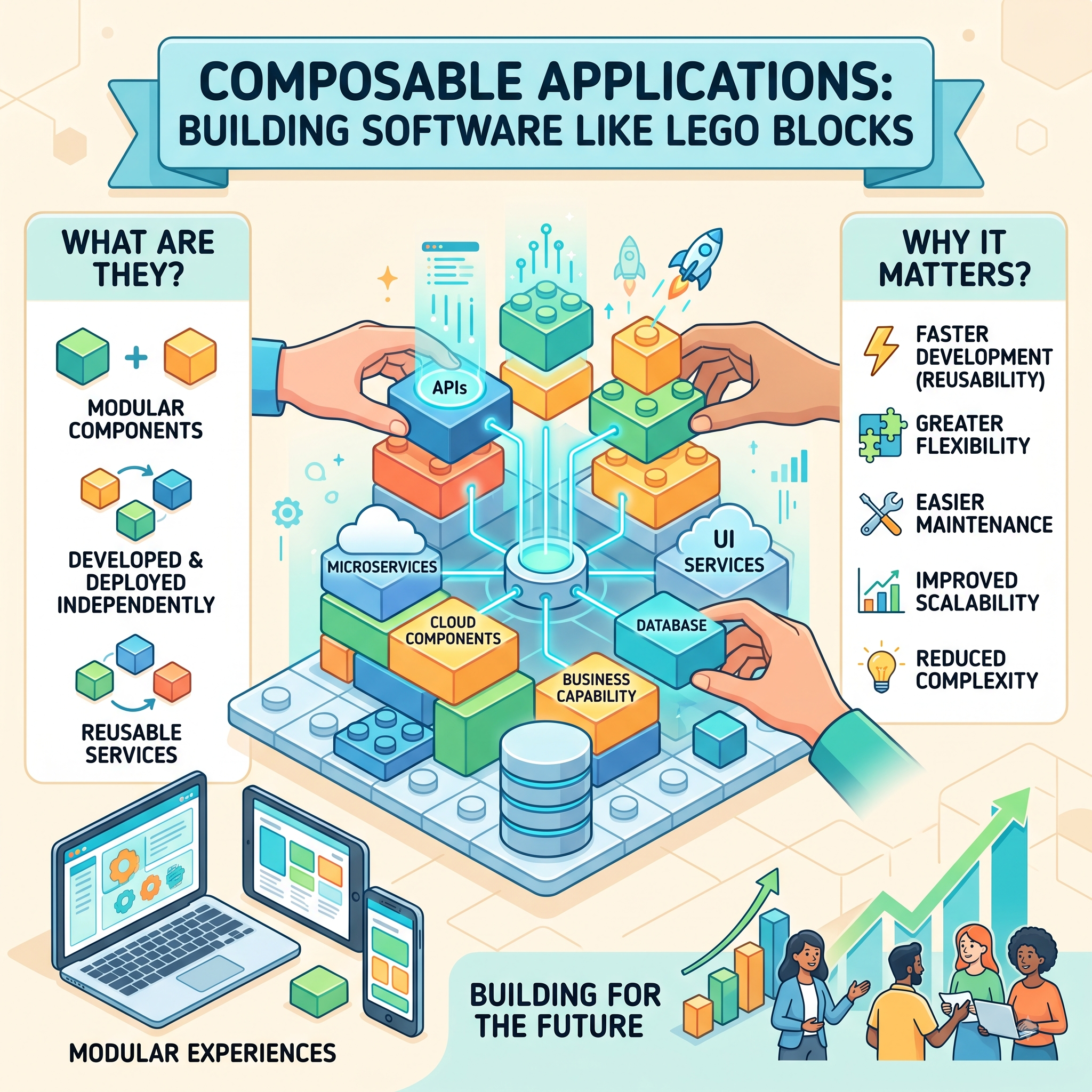
Modern software needs to adapt quickly as businesses introduce new products, services, and digital experiences. Composable applications address this need by breaking software into independent, reusable building blocks that can be combined and changed as requirements evolve.
Much like LEGO blocks, each component can serve a specific purpose while working together to create a larger application.
🧩 What Are Composable Applications?
Composable applications are built using modular components that can be developed, deployed, and updated independently. Instead of creating one tightly connected system, developers assemble applications from reusable services and capabilities.
These components can include:
• APIs and microservices for reusable functionality
• Cloud services for scalable infrastructure
• Reusable UI components for consistent experiences
• Independent business capabilities that can evolve separately
This modular approach makes software easier to adapt and extend.
⚙️ Why Composable Architecture Matters
Traditional applications can become difficult to change as new features and integrations are added. Composable architecture reduces this complexity by keeping components more independent.
Key benefits include:
• Faster development through reusable components
• Greater flexibility when business requirements change
• Easier maintenance and independent updates
• Improved scalability across different workloads
• Reduced development complexity through modular design
Businesses can introduce new capabilities without rebuilding the entire application.
🚀 Powering Modern Digital Experiences
Composable applications are especially valuable for businesses that need to deliver different experiences across websites, mobile apps, platforms, and connected devices.
With APIs, cloud services, microservices, and modular front-end technologies, teams can combine the right components for each use case while maintaining a flexible technology foundation.
This approach supports applications that can evolve continuously rather than requiring major redesigns whenever requirements change.
🌐 Building Software That Adapts
As digital businesses become more dynamic, software needs to be equally adaptable. Composable architecture provides the flexibility to replace, reuse, and combine components as new technologies and business needs emerge.
The future of software isn’t about building everything from scratch — it’s about combining the right pieces to build smarter.
