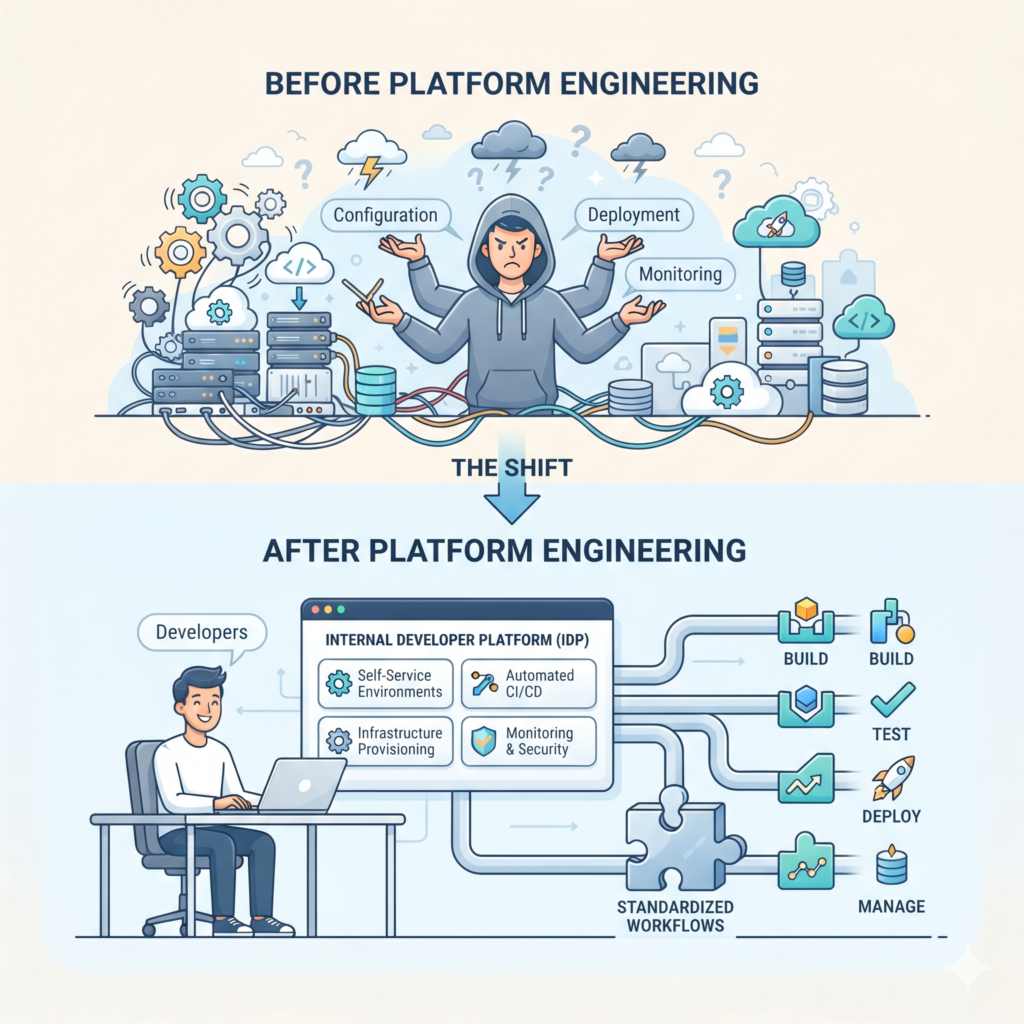

As software systems become more complex, developers spend increasing amounts of time managing infrastructure, deployment pipelines, and development tools. Platform Engineering is emerging as a modern approach that simplifies these challenges by providing developers with self-service platforms and standardized workflows.
Instead of managing infrastructure for every project, development teams can focus on building high-quality software faster and more efficiently.
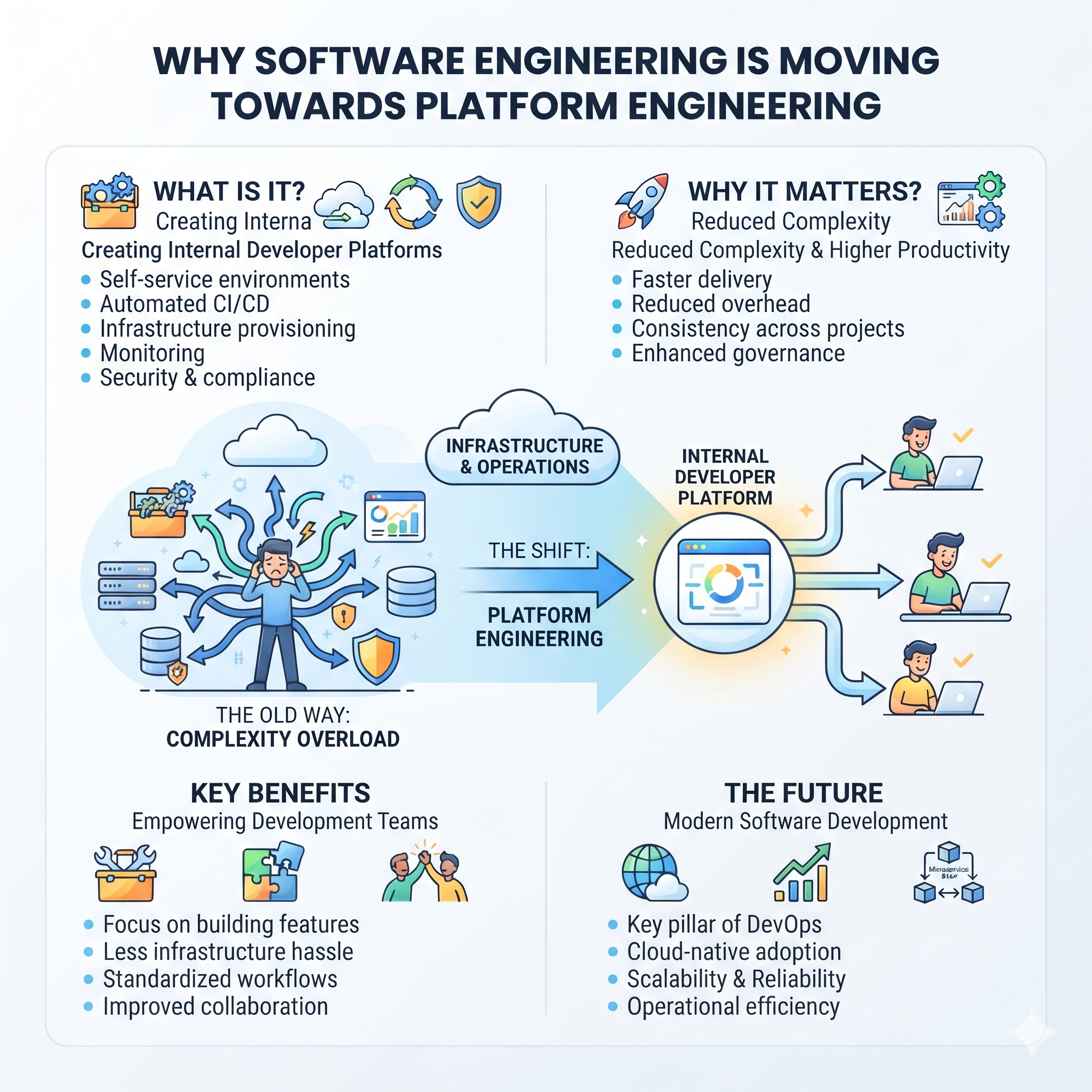
🏗️ What Is Platform Engineering?
Platform Engineering focuses on creating internal developer platforms that provide everything teams need to build, test, deploy, and manage applications.
These platforms typically include:
• Self-service development environments
• Automated CI/CD pipelines
• Infrastructure provisioning
• Monitoring and observability tools
• Security and compliance controls
This creates a consistent and efficient development experience across teams.
⚙️ Why the Shift Matters
As organizations scale, Platform Engineering helps reduce operational complexity while improving developer productivity.
Key benefits include:
• Faster software development and delivery
• Reduced infrastructure management overhead
• Improved consistency across projects
• Enhanced security and governance
• Better collaboration between development and operations teams
By standardizing workflows, teams can spend more time building features and less time solving infrastructure challenges.
🌐 The Future of Software Development
Platform Engineering is becoming a key pillar of modern software organizations, especially those embracing DevOps, cloud-native development, and microservices. It empowers developers with the tools they need while ensuring scalability, reliability, and operational efficiency.
The future of software engineering isn’t just about writing better code—it’s about building better platforms that help developers succeed.