
As software applications grow in users, features, and complexity, having a strong architecture becomes increasingly important. Software architecture provides the structural foundation that determines how different components communicate, scale, and evolve over time.
For small applications, architecture decisions may seem simple. But as systems become larger, poor architectural choices can lead to performance issues, difficult maintenance, and rising development costs.
🏗️ Why Software Architecture Matters
Software architecture defines how an application is organized and how its different components work together. A well-designed architecture helps development teams build systems that remain manageable as requirements change.
Strong architecture provides:
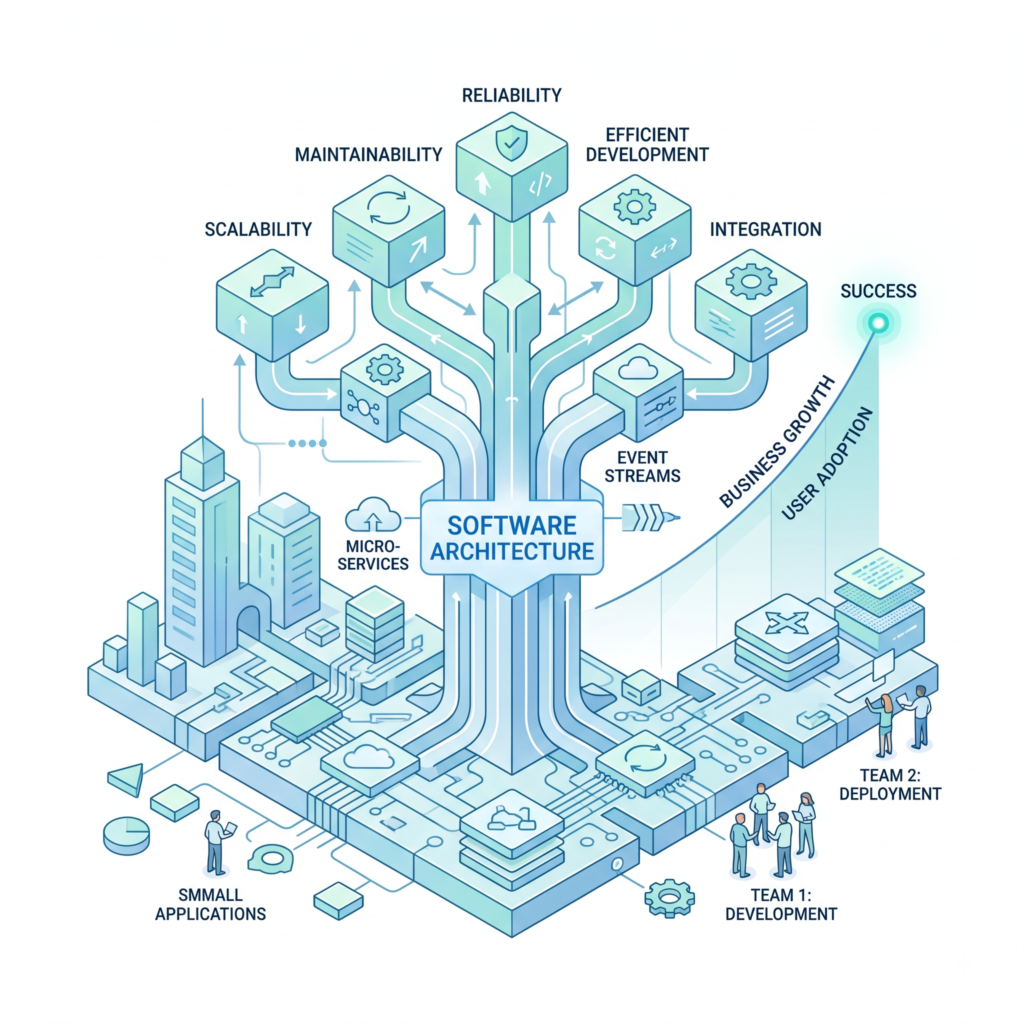
• Better scalability as users and workloads increase
• Improved maintainability through clear system organization
• Greater reliability by reducing dependencies and failure risks
• Easier integration with external services and platforms
• Better development efficiency across larger teams
These advantages become especially important for enterprise and large-scale applications.
⚙️ Challenges in Large Applications
Large applications often contain multiple services, databases, APIs, integrations, and user interfaces. Without a clear architectural strategy, these components can become tightly connected and difficult to manage.
Common challenges include:
• Increasing system complexity
• Slow feature development
• Difficult debugging and maintenance
• Performance bottlenecks
• Growing technical debt
A thoughtful architecture helps teams address these challenges before they become major problems.
🚀 Modern Architecture Approaches
Developers today have several architectural approaches for building scalable applications. Depending on business requirements, teams may use:
• Microservices for independently scalable services
• Event-Driven Architecture for reactive and distributed systems
• Layered Architecture for clear separation of responsibilities
• Cloud-Native Architecture for flexible and scalable infrastructure
• Modular Architecture for easier development and maintenance
The right approach depends on the application’s requirements, team structure, expected growth, and operational needs.
🌐 Building Applications for Long-Term Growth
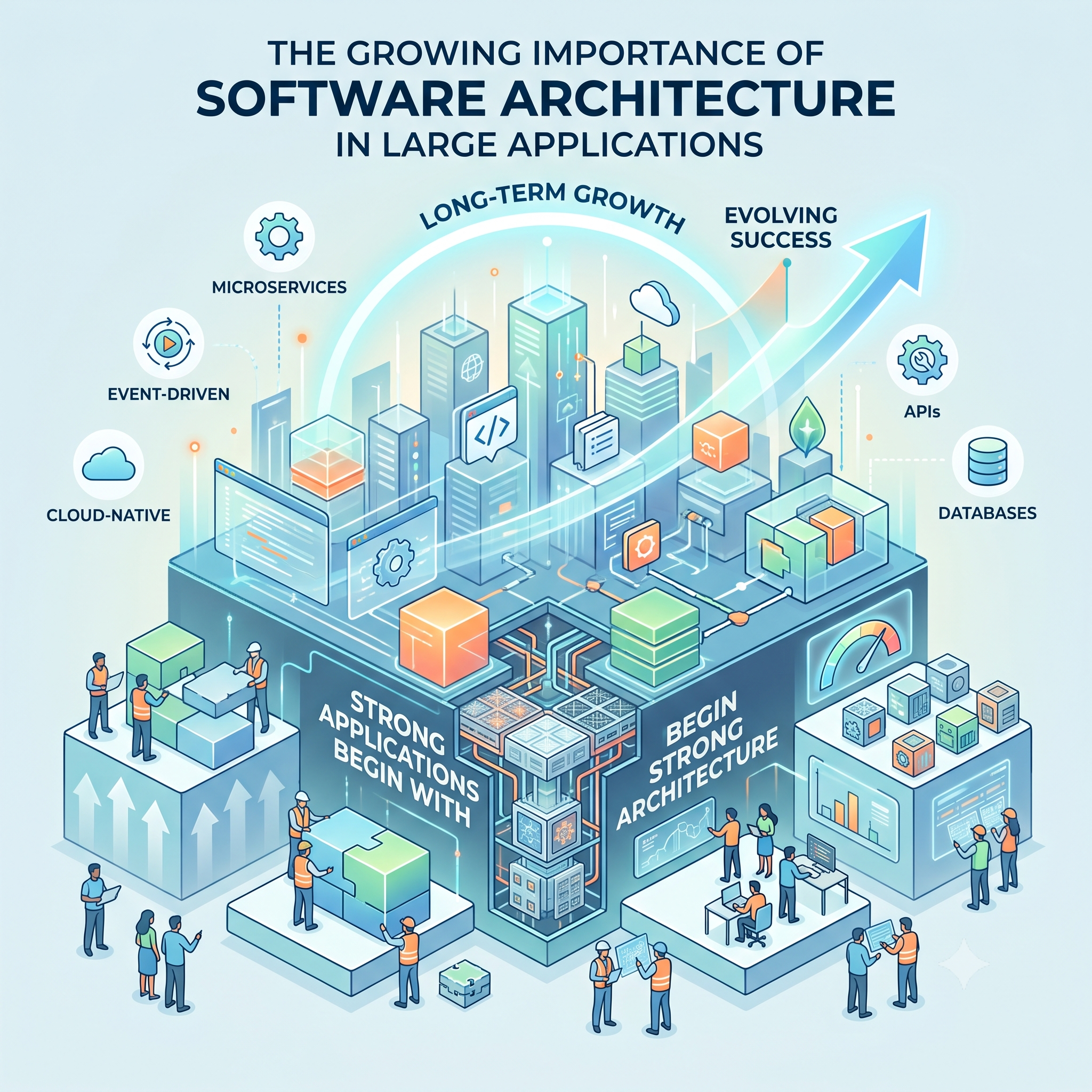
Good software architecture isn’t only about solving today’s problems. It creates a foundation that allows applications to evolve as businesses grow and technology changes.
Strong applications begin with strong architecture — because the way software is structured today can determine how successfully it grows tomorrow.