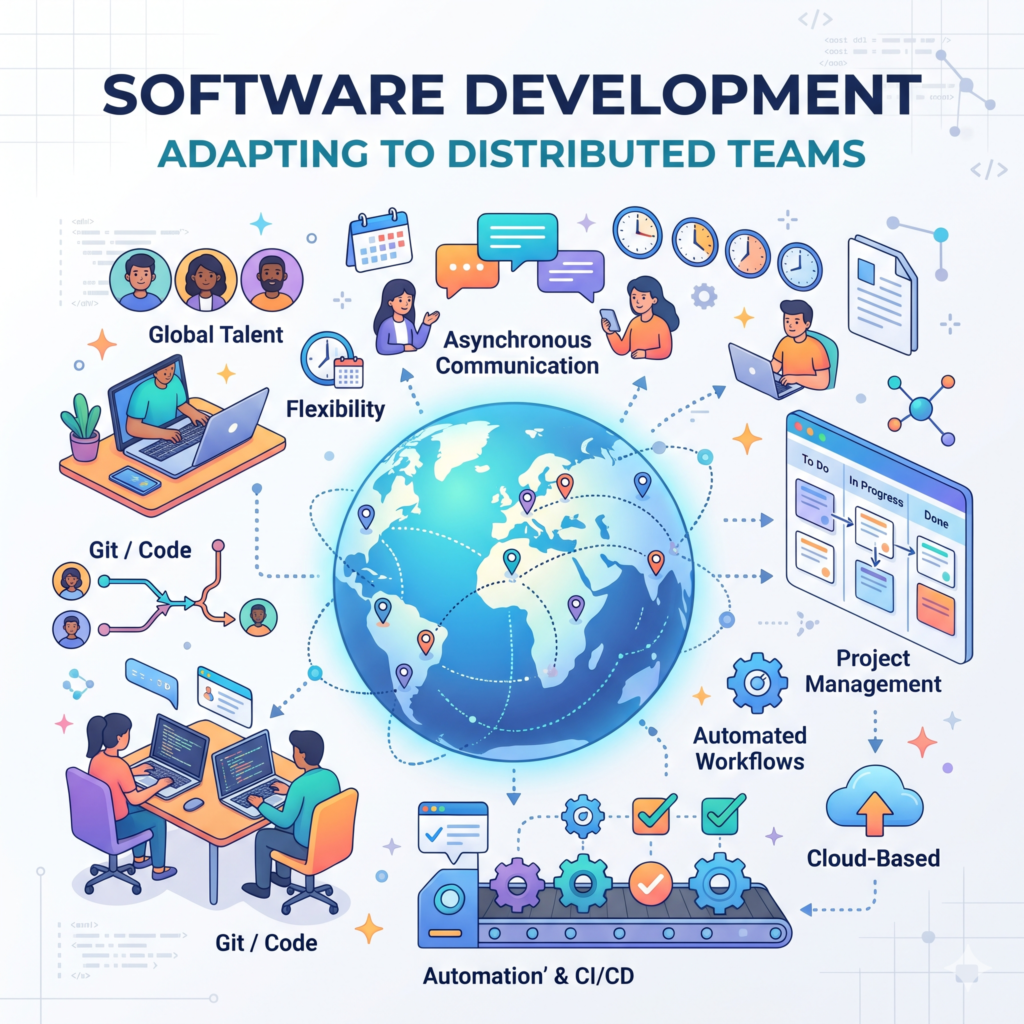


Software development is no longer limited to teams working in the same office. With remote work and global collaboration becoming increasingly common, companies are adapting their development processes to support distributed teams working across different locations and time zones.
Modern tools, cloud-based platforms, and collaborative workflows allow developers to work together efficiently, share knowledge, and deliver high-quality software regardless of physical distance.
🌐 What Are Distributed Development Teams?
Distributed development teams consist of developers, designers, testers, and project managers working from different locations while contributing to the same software project.
These teams rely on digital tools and structured workflows to coordinate their work.
Common technologies include:
- Version Control Systems like Git for managing code collaboratively
- Communication Tools for discussions and team coordination
- Cloud Development Environments for shared access to resources
- Project Management Platforms for tracking tasks and progress
These tools help teams stay connected and maintain a consistent development process.
⚙️ Challenges and Opportunities
Working across locations offers flexibility, but it also requires effective communication and coordination. Differences in time zones, communication styles, and working schedules can create challenges.
Distributed teams can overcome these obstacles through:
- Clear documentation and shared project goals
- Asynchronous communication to reduce unnecessary meetings
- Automated testing and CI/CD pipelines
- Regular progress updates and code reviews
These practices improve transparency, reduce delays, and help teams work more independently.
🚀 Benefits of Distributed Software Development
When managed effectively, distributed teams offer several advantages:
- Access to Global Talent – Businesses can work with skilled professionals from different regions.
- Greater Flexibility – Teams can organize work around different schedules.
- Improved Productivity – Focused workflows and automation reduce unnecessary interruptions.
- Business Continuity – Distributed teams can maintain operations across locations.
With the right processes, organizations can build strong development teams without geographical limitations.
💡 The Future of Collaborative Development
As software projects become more complex, distributed development will continue to depend on collaboration, automation, and effective knowledge sharing. AI-powered tools, cloud platforms, and modern development workflows are making it easier for teams to coordinate tasks and solve problems efficiently.
The future of software development isn’t defined by where teams work — it’s defined by how effectively they collaborate and innovate together.