

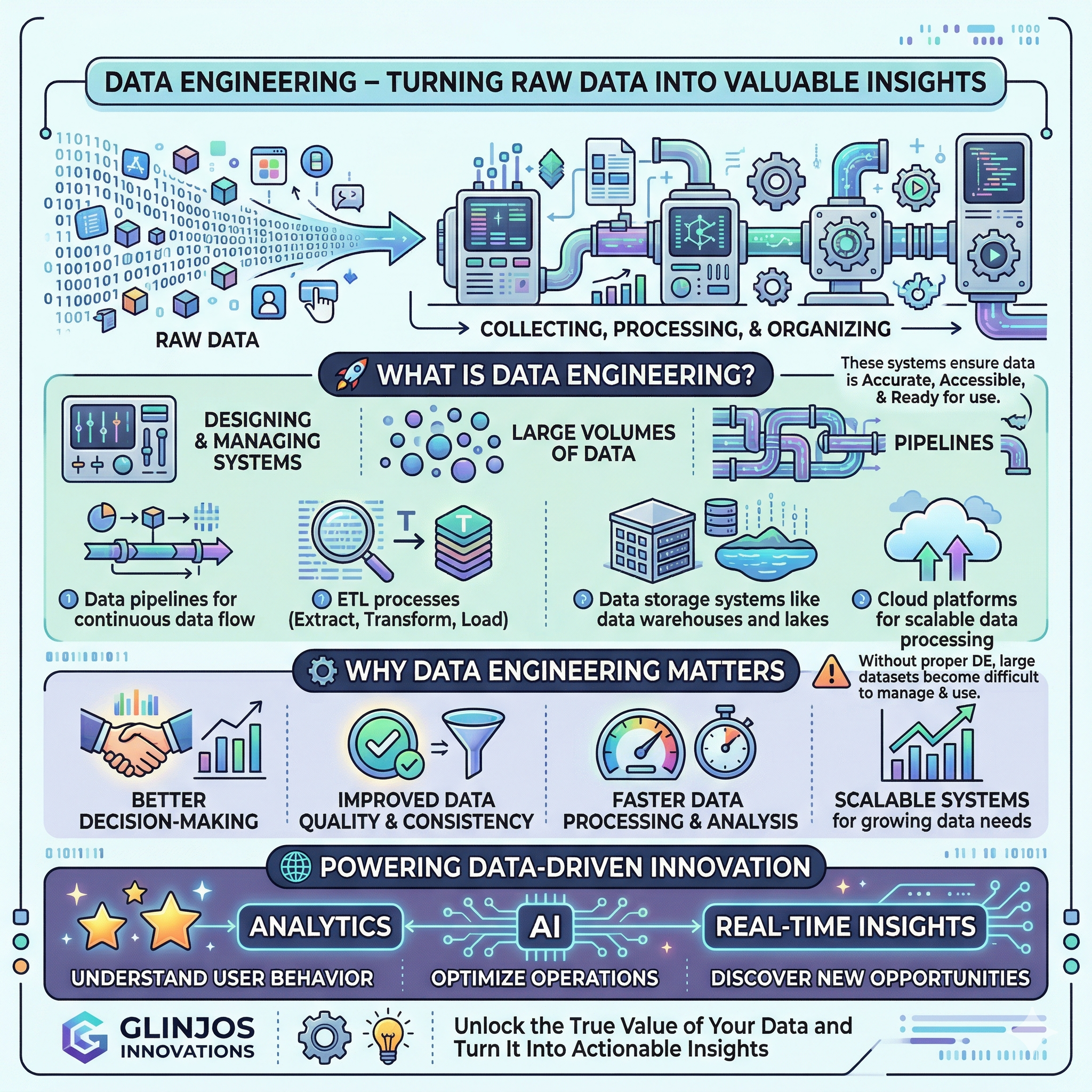
Data is generated everywhere — from applications, devices, and user interactions — but raw data alone holds little value. Data Engineering focuses on collecting, processing, and organizing this data so it can be transformed into meaningful insights.
By building reliable data systems, organizations can turn scattered information into a powerful asset for decision-making and innovation.
🚀 What Is Data Engineering?
Data engineering involves designing and managing systems that handle large volumes of data efficiently. This includes building pipelines that collect, clean, and prepare data for analysis.
Key components include:
• Data pipelines for continuous data flow
• ETL processes (Extract, Transform, Load)
• Data storage systems like data warehouses and lakes
• Cloud platforms for scalable data processing
These systems ensure that data is accurate, accessible, and ready for use.
⚙️ Why Data Engineering Matters
Well-structured data systems help businesses operate more effectively and make informed decisions.
Benefits include:
• Better decision-making through reliable insights
• Improved data quality and consistency
• Faster data processing and analysis
• Scalable systems for growing data needs
Without proper data engineering, even large datasets can become difficult to manage and use.
🌐 Powering Data-Driven Innovation
As organizations rely more on analytics, AI, and real-time insights, data engineering becomes a critical foundation. It enables businesses to understand user behavior, optimize operations, and discover new opportunities.
In today’s digital world, success isn’t just about having data — it’s about making data work for you.
