
Good software is not just about making things work — it’s about writing code that is clean, readable, and easy to maintain. High code quality ensures that applications can be updated, debugged, and scaled without unnecessary complexity.
Well-structured code makes collaboration smoother and reduces the chances of errors as projects grow.
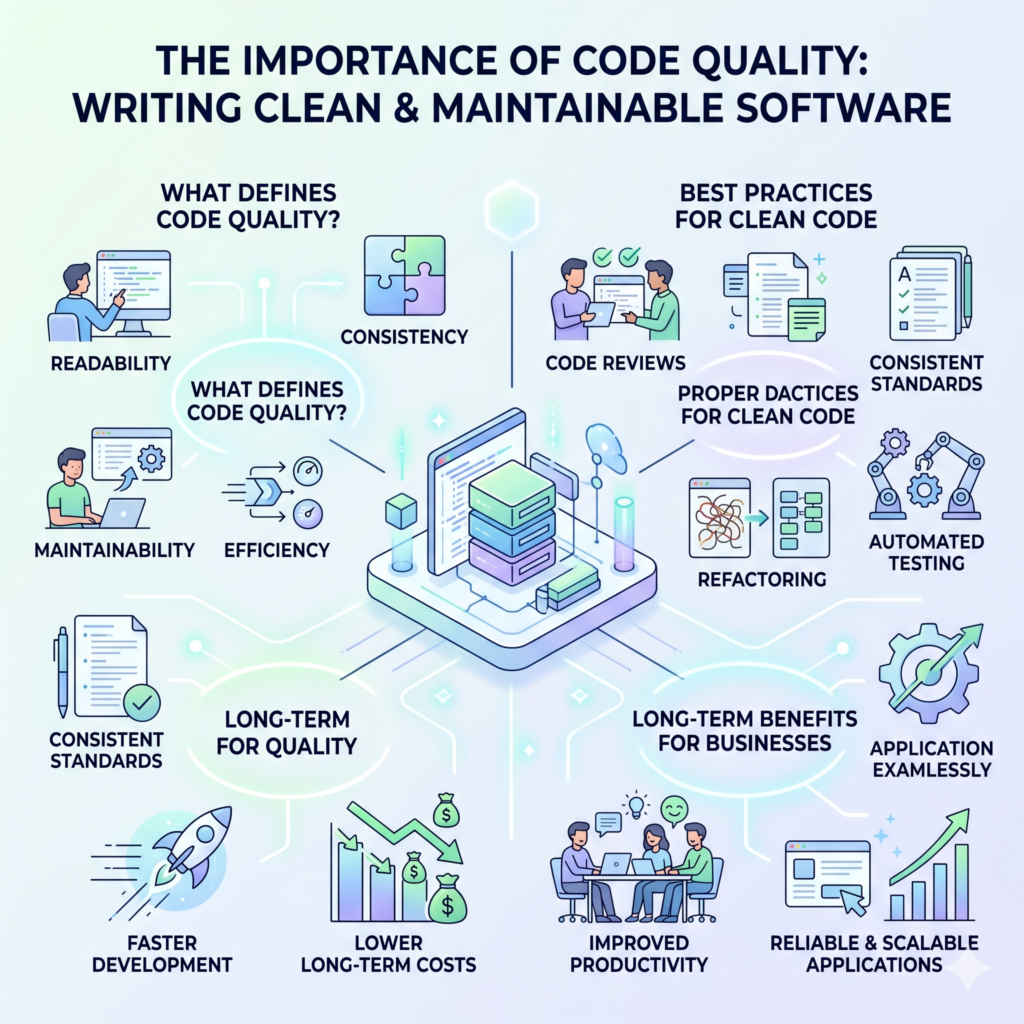
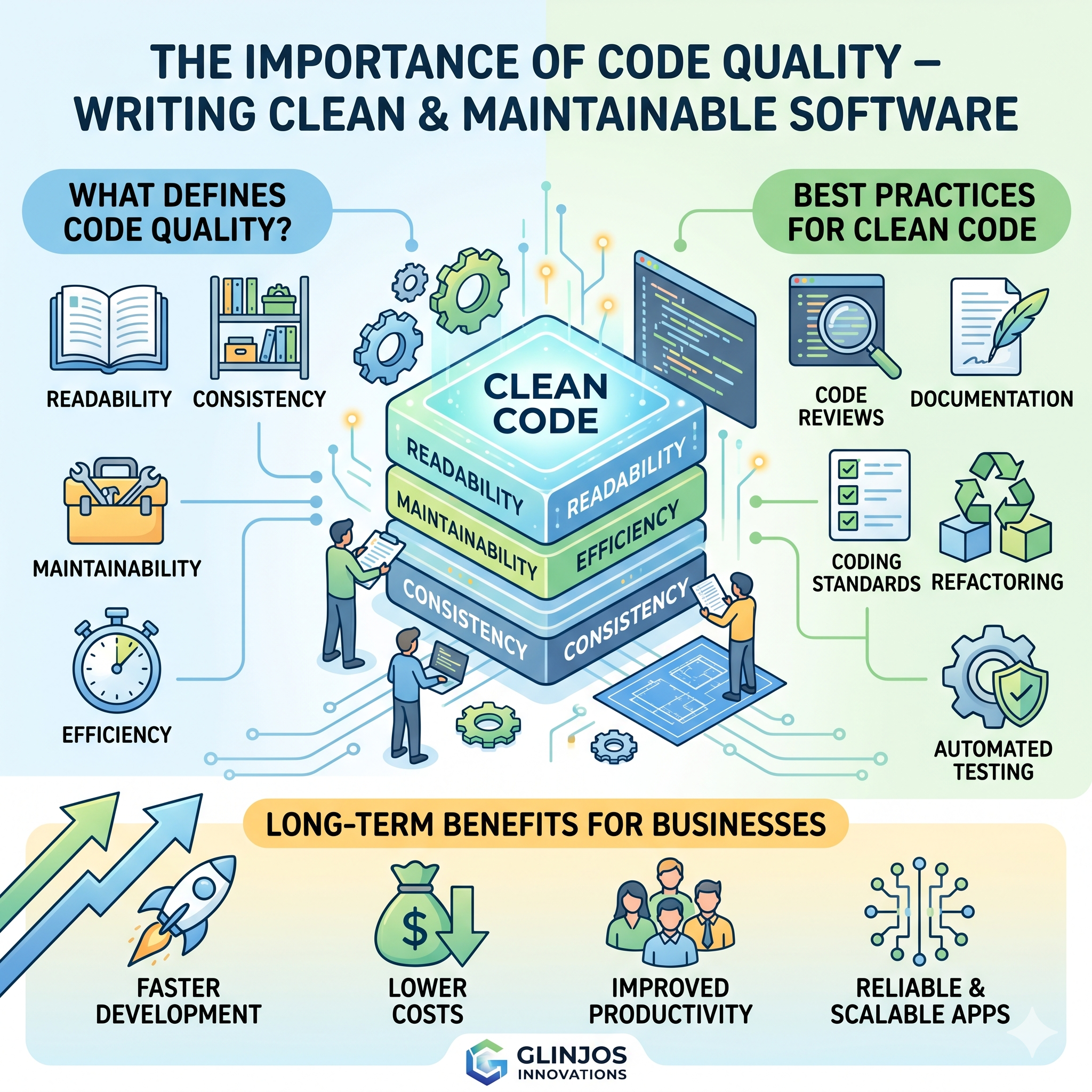
🧩 What Defines Code Quality?
Code quality goes beyond functionality. It focuses on how well the code is written and organized.
Key aspects include:
• Readability – Easy for developers to understand and work with
• Consistency – Following standard coding practices and patterns
• Maintainability – Simple to update and improve over time
• Efficiency – Optimized for performance without unnecessary complexity
These factors help teams build software that lasts.
⚙️ Best Practices for Clean Code
Maintaining high code quality requires discipline and the right development practices:
• Code reviews to catch issues early
• Proper documentation for clarity and collaboration
• Consistent coding standards across teams
• Refactoring to improve existing code structure
• Automated testing to ensure reliability
These practices reduce bugs and improve overall software stability.
🌐 Long-Term Benefits for Businesses
Investing in code quality pays off in the long run. Clean code reduces technical debt, making it easier to scale applications and add new features without major rewrites.
Benefits include:
• Faster development and easier maintenance
• Lower long-term costs
• Improved team productivity
• More reliable and scalable applications
Great software isn’t just built to work — it’s built to last.