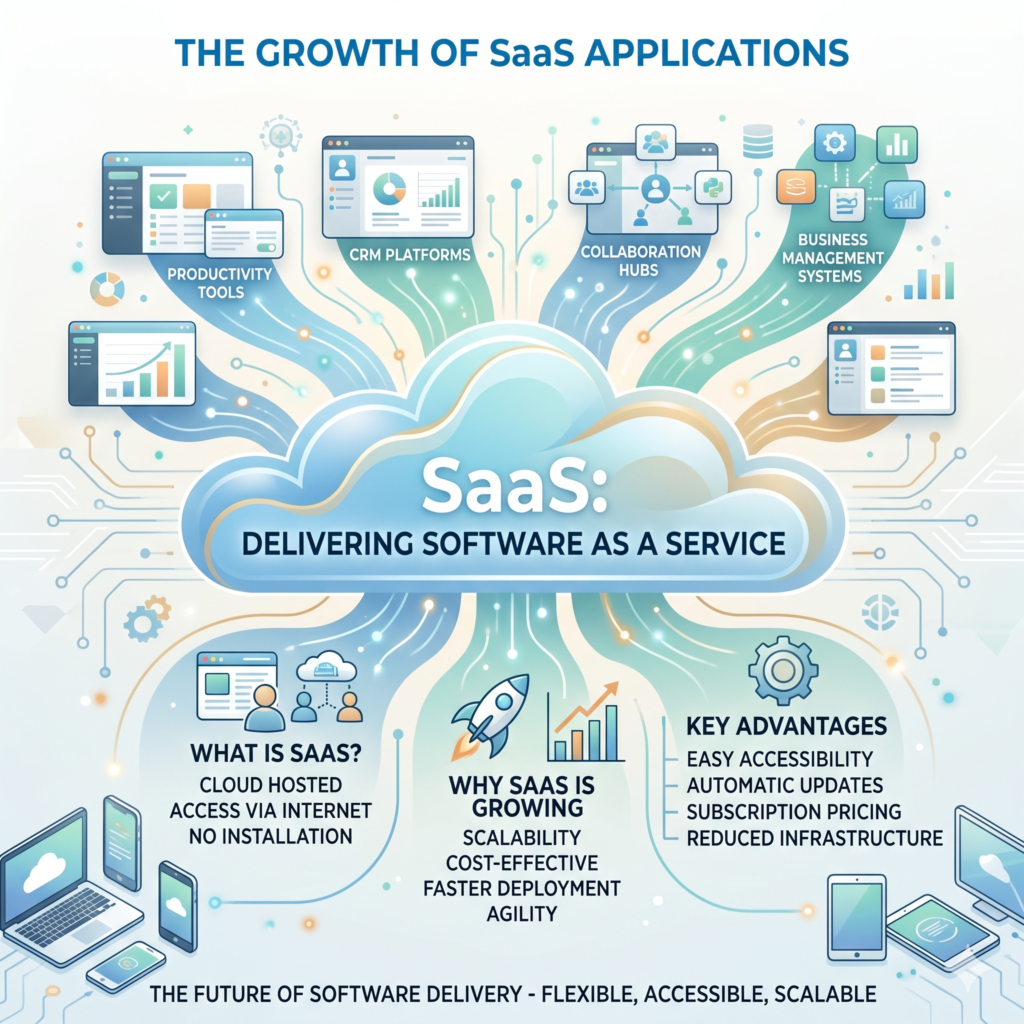

Software is no longer something users need to install and manage on their own devices. Software as a Service (SaaS) has transformed the way businesses deliver applications by making software accessible through the internet, anytime and anywhere.
From productivity tools and CRM platforms to collaboration and business management systems, SaaS has become a cornerstone of modern digital services.
☁️ What Is SaaS?
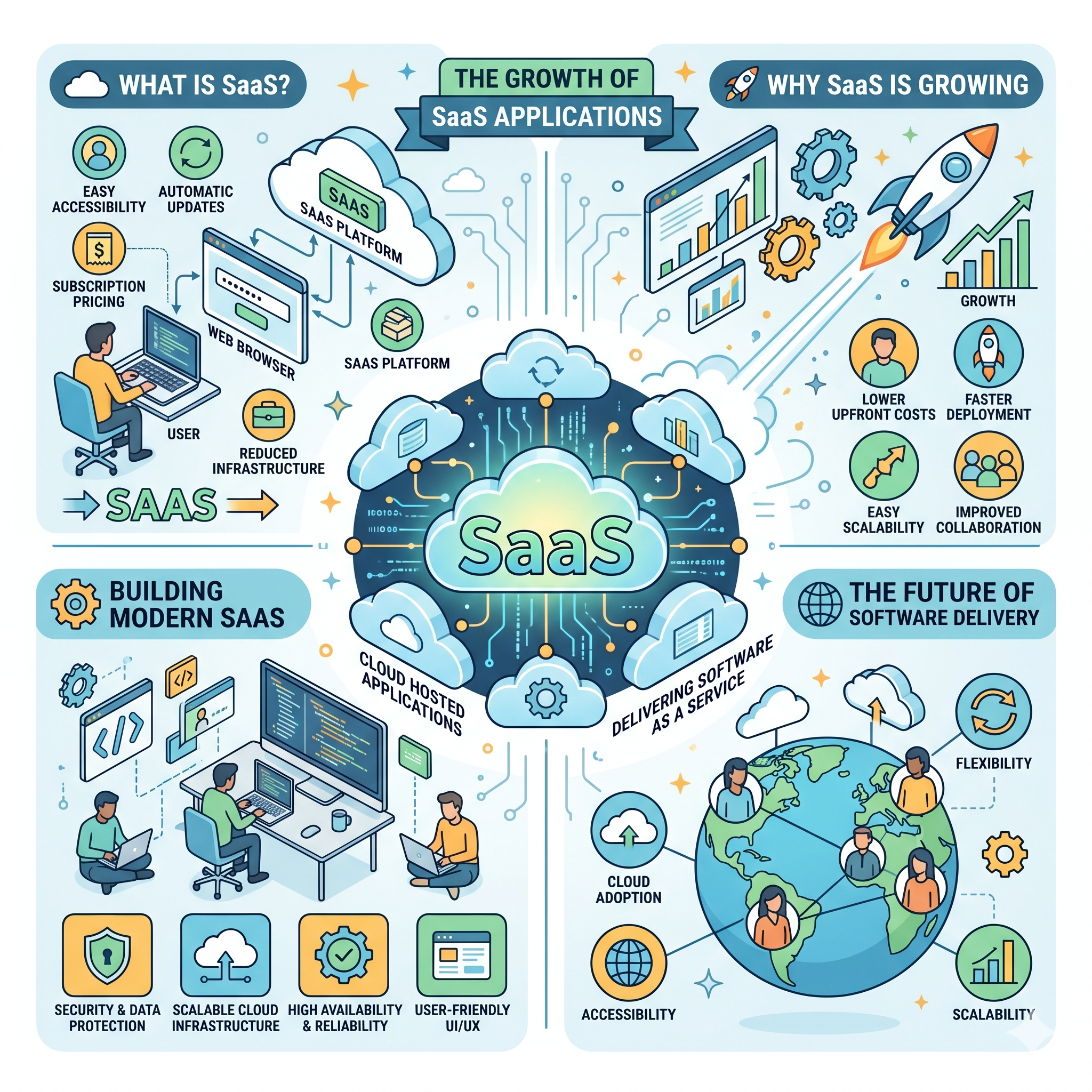
SaaS is a software delivery model where applications are hosted in the cloud and accessed through a web browser. Users can simply log in and start using the software without worrying about installation, updates, or maintenance.
Key advantages include:
• Easy accessibility from any device with an internet connection
• Automatic updates managed by the service provider
• Subscription-based pricing for greater flexibility
• Reduced infrastructure requirements for businesses
This makes SaaS both convenient and cost-effective.
🚀 Why SaaS Is Growing Rapidly
Businesses of all sizes are adopting SaaS solutions because they offer scalability and operational efficiency.
Benefits include:
• Lower upfront costs compared to traditional software
• Faster deployment and onboarding
• Easy scalability as business needs grow
• Improved collaboration through cloud-based access
These advantages help organizations stay agile in a competitive market.
⚙️ Building Modern SaaS Applications
Developing a successful SaaS platform requires more than just functionality. Developers must focus on:
• Security and data protection
• Scalable cloud infrastructure
• High availability and reliability
• User-friendly interfaces and experiences
A well-designed SaaS application can serve thousands of users while maintaining performance and stability.
🌐 The Future of Software Delivery
As cloud adoption continues to rise, SaaS is becoming the preferred way to deliver software across industries. Its flexibility, accessibility, and scalability make it an ideal model for modern businesses and users alike.
SaaS isn’t just changing how software is delivered — it’s redefining how businesses operate in the digital age.