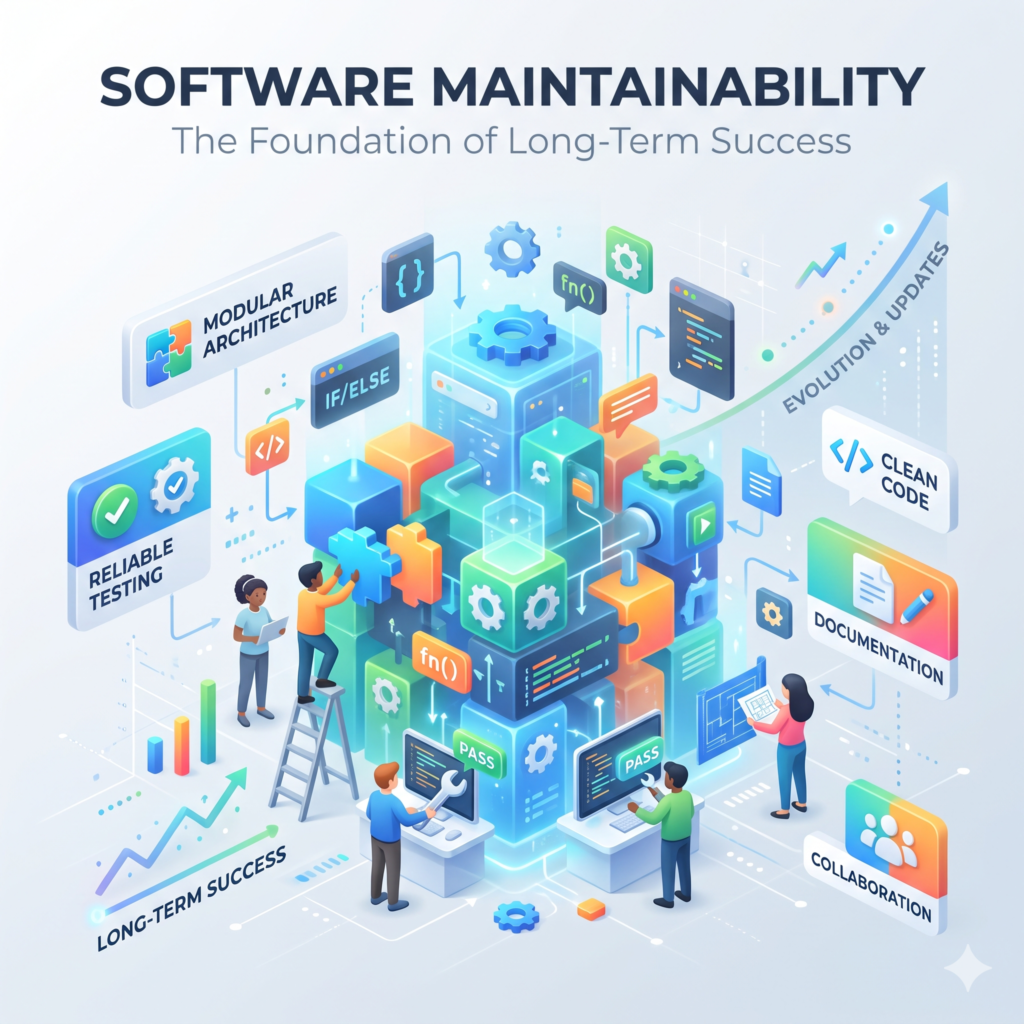

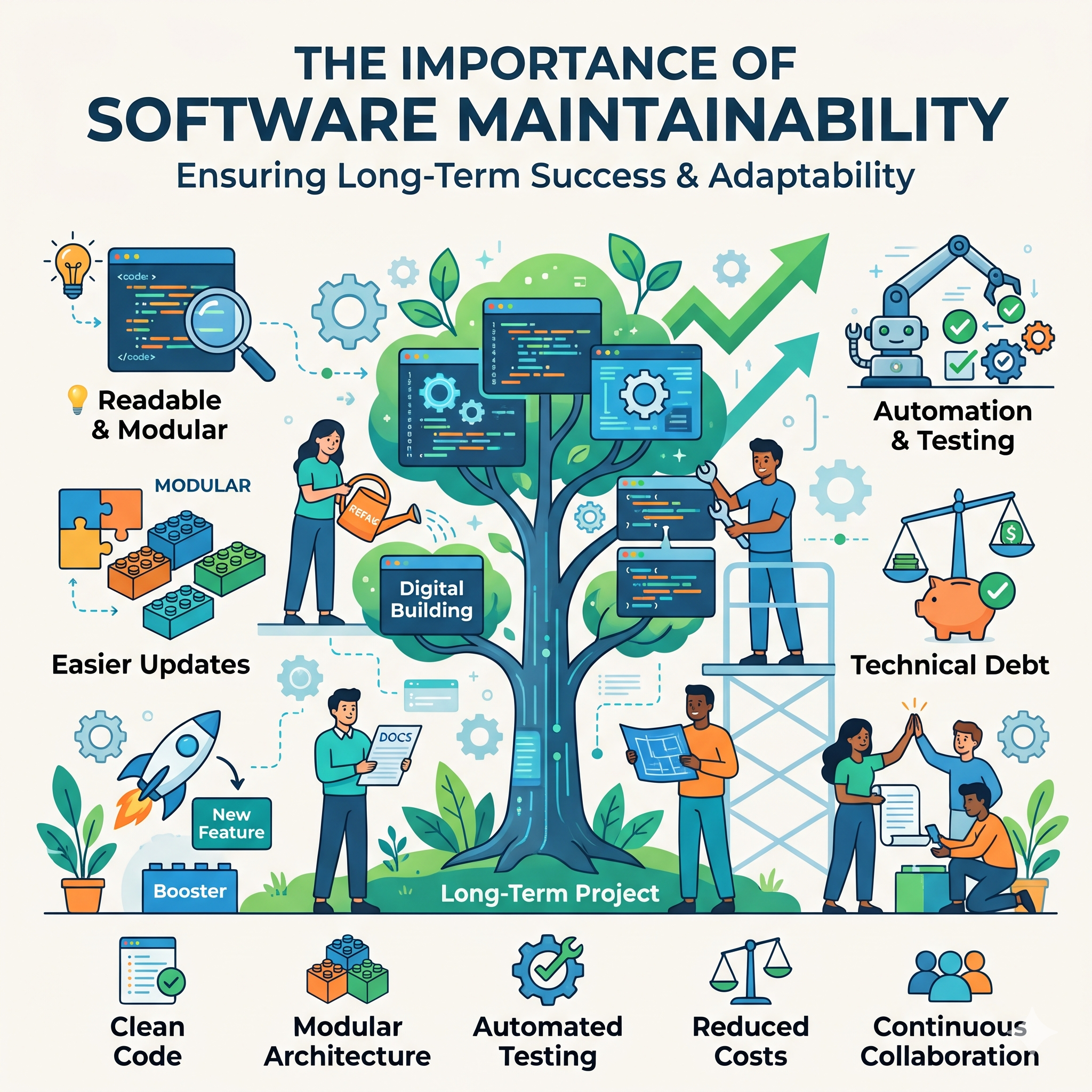
Software development doesn’t end when an application is launched. As businesses grow, user expectations change, and technologies evolve, software needs regular updates and improvements to remain useful and reliable. This is where software maintainability becomes essential.
Maintainable software is easier to understand, modify, test, and improve over time. It helps development teams manage changes efficiently, reduce technical issues, and ensure that applications continue to deliver value in the long run.
🛠️ What Is Software Maintainability?
Software maintainability refers to how easily a software system can be updated, corrected, enhanced, and adapted to new requirements. Well-maintained code is organized, readable, and designed to support future changes without creating unnecessary complexity.
Key characteristics include:
- Readable code: Developers can understand the code without excessive effort.
- Modular architecture: Components can be updated independently where appropriate.
- Effective documentation: Important design decisions and system behavior are clearly explained.
- Reliable testing: Automated tests help identify problems when changes are introduced.
- Consistent coding standards: Shared conventions make collaboration easier.
🚀 Why Is Maintainability Important?
1. Easier Updates and Enhancements
Business requirements rarely remain the same. Maintainable software allows teams to introduce new features, improve existing functionality, and respond to user feedback with less disruption.
2. Reduced Long-Term Costs
Poorly structured software can become increasingly expensive to modify. Small changes may require extensive rework or introduce unexpected bugs. Maintainable code helps reduce these risks and makes ongoing development more efficient.
3. Improved Reliability and Stability
Regular maintenance, supported by clear code and effective testing, helps teams identify defects and resolve issues before they affect more users. This contributes to a more stable software experience.
4. Better Team Collaboration
Long-term projects often involve multiple developers, including people who join the team after the initial release. Clear code, documentation, and consistent practices help new team members understand the system and contribute more effectively.
5. Easier Adaptation to New Technologies
Frameworks, platforms, security standards, and integration requirements change over time. A maintainable system is generally easier to adapt when new technologies or business needs emerge.
💡 Best Practices for Improving Maintainability
Development teams can improve software maintainability by adopting a few practical habits:
- Write clean, readable code: Prioritize clarity over unnecessary complexity.
- Follow consistent standards: Use agreed-upon naming conventions, formatting, and design principles.
- Create automated tests: Test critical functionality to catch regressions early.
- Document important decisions: Explain complex logic, architectural choices, and setup procedures.
- Conduct regular code reviews: Identify potential issues and share knowledge across the team.
- Refactor when necessary: Improve the internal structure of code without changing its intended behavior.
- Address technical debt: Review shortcuts and outdated components before they become difficult to manage.
- Keep dependencies updated: Apply appropriate updates and security fixes while checking compatibility.
🔍 Maintainability Is a Continuous Process
Maintainability should not be treated as a task reserved for the end of a project. It is an ongoing responsibility that begins during planning and continues throughout development, deployment, and future updates.
Making time for code quality, testing, documentation, and refactoring helps teams prevent complexity from growing unchecked. Even small, consistent improvements can make a significant difference over the life of a software product.
🎯 Conclusion
Software maintainability plays a vital role in the long-term success of any software project. It supports easier updates, better reliability, stronger collaboration, and more efficient use of development resources.