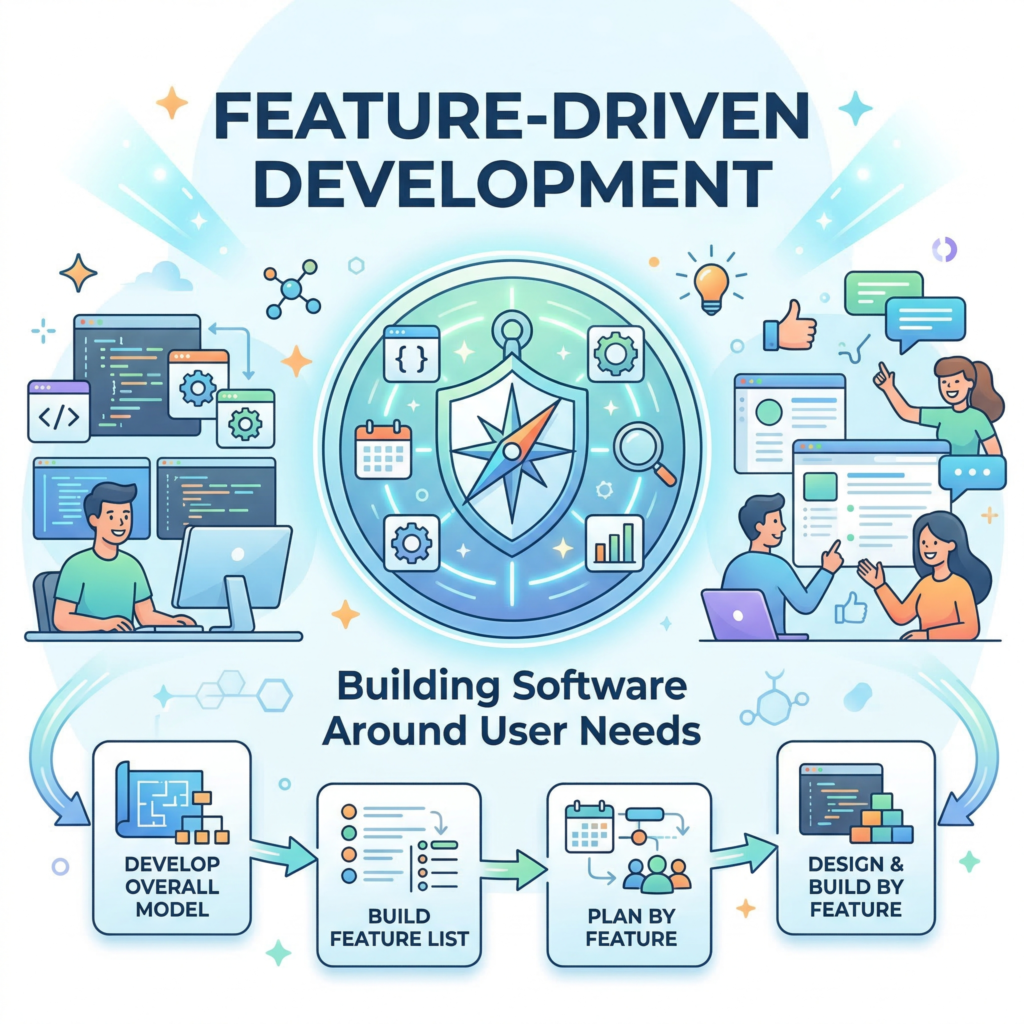

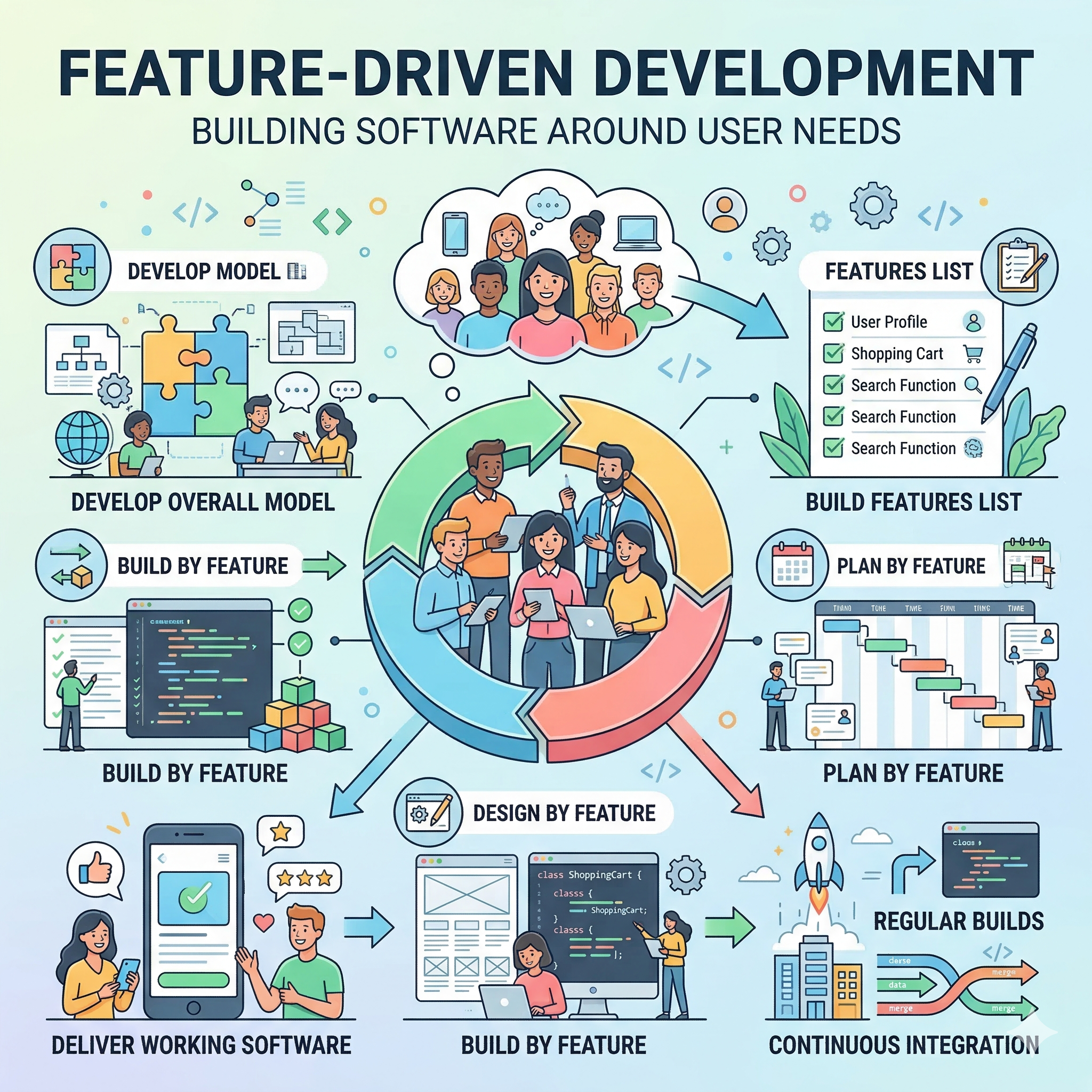
In modern software development, delivering value quickly is essential. Feature-Driven Development (FDD) focuses on building software around small, client-valued features rather than large, complex releases. This approach ensures continuous progress while keeping development aligned with real user needs.
Instead of long development cycles, FDD breaks projects into manageable pieces, allowing teams to design, build, and deliver features step by step.
🚀 What Is Feature-Driven Development?
Feature-Driven Development is an iterative approach where each feature represents a specific functionality that delivers value to the end user.
This method helps teams:
• Break down complex projects into smaller, manageable features
• Deliver working functionality in shorter cycles
• Maintain clear visibility into project progress
• Align development closely with business goals
By focusing on individual features, teams can move faster while maintaining quality and structure.
⚙️ How FDD Improves Development Efficiency
FDD introduces a structured workflow that keeps development organized and predictable. Each feature goes through stages like planning, design, and implementation, ensuring consistency across the project.
Key advantages include:
• Faster delivery of features with shorter development cycles
• Reduced risks by identifying issues early
• Better team collaboration with clear responsibilities
• Improved product quality through incremental development
This approach helps teams stay focused and productive throughout the development lifecycle.
🌐 Delivering Continuous Value to Users
In a competitive digital environment, user expectations change rapidly. FDD allows businesses to adapt by continuously releasing improvements and new features based on user feedback.
Great software isn’t built all at once — it’s built feature by feature, with the user at the center of every step.